11. Turret Point |
||||||||||||

|
||||||||||||
|---|---|---|---|---|---|---|---|---|---|---|---|---|
|
||||||||||||
|
||||||||||||
| Description | ||||||||||||
| TOPOGRAPHY | ||||||||||||
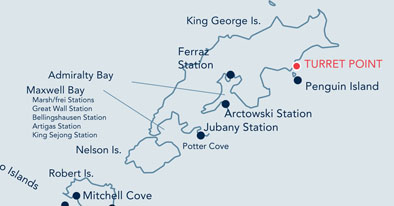
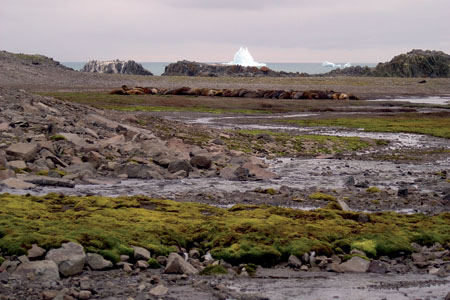
| Turret Point is marked by conspicuous rock stacks that form the eastern limit of King George Bay west of Three Sisters Point. There is a cobble beach on the southern coast and melt pools inland. The beach gently slopes to an extensive, heavily crevassed glacier. | ||||||||||||
| FAUNA | ||||||||||||
| Confirmed breeders: Adélie penguin, Antarctic tern, Blue-eyed shag, chinstrap Penguin, Kelp gull, Southern giant petrel. | ||||||||||||
| Regularly haul out: Antarctic fur seal, Southern elephant seal, Weddell seal. | ||||||||||||
| Suspected Breeders: Skua, Snowy sheathbill. | ||||||||||||
| FLORA | ||||||||||||
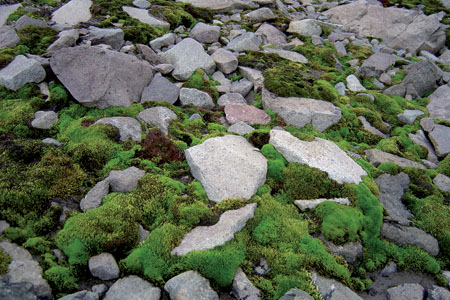
| Swards of moss species, the lichens Xanthoria spp., Caloplaca spp. and other crustose lichens. | ||||||||||||
| Visitor Impact | ||||||||||||
| KNOWN IMPACTS | ||||||||||||
| None. | ||||||||||||
| POTENTIAL IMPACTS | ||||||||||||
| Trampling of vegetation en route to the glacier and disturbance of wildlife, particularly southern giant petrels. | ||||||||||||
| Landing Requirements | ||||||||||||
| SHIPS* | ||||||||||||
|
Max pax on board: 200
Ships at a time: 1 Comments: Maximum 2 ships per day (midnight to midnight). * A ship is defined as a vessel which carries more than 12 passengers. |
||||||||||||
| VISITORS | ||||||||||||
|
Maximum number of visitors at any time, exclusive of expedition guides and leaders: 100 Visitors per guide: 20 Curfew time period (from/to), in order to establish a rest period for wildlife: 22:00-04:00 |
||||||||||||
| Visitor Area | ||||||||||||
| LANDING AREA | ||||||||||||
|
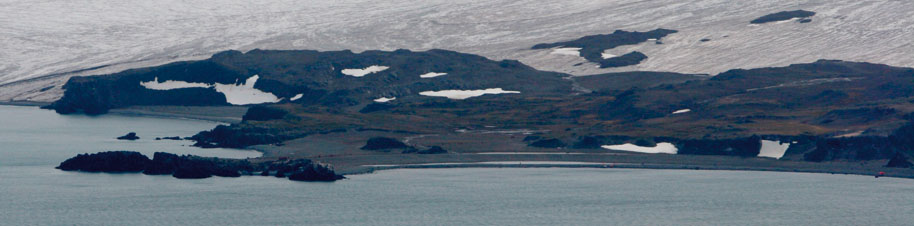
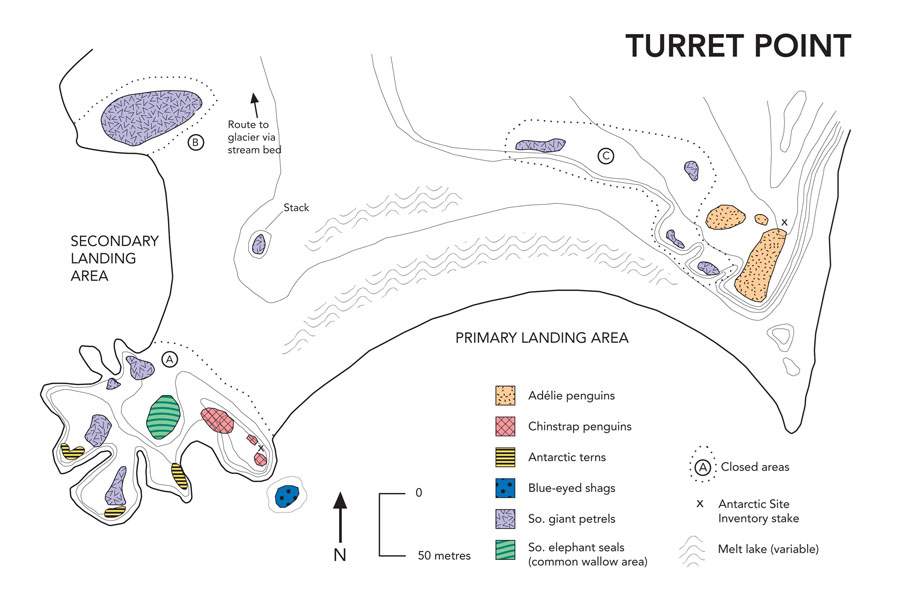
Primary: along an exposed broad cobble beach to the south, which may be packed with ice. Secondary: to the west. If this is used, be sure to stay clear of nesting sites for southern giant petrel at both ends of the beach (Closed Areas A and B). |
||||||||||||
| CLOSED AREA | ||||||||||||
|
Closed Area A: Biodiverse fragile area including nesting southern giant petrels, kelp gulls, chinstrap penguins, blue-eyed shags and elephant seals wallows. Closed Area B: Nesting southern giant petrels. Closed Area C: Elevated area above the beach with nesting southern giant petrels. |
||||||||||||
| GUIDED WALKING AREA | ||||||||||||
| Visitors to the glacier should be guided in small groups following the streambed to avoid trampling of vegetation. | ||||||||||||
| FREE ROAMING AREA | ||||||||||||
| Visitors may roam freely, but under supervision, between the landing beaches, avoiding the closed areas. | ||||||||||||
| Visitor code of conduct | ||||||||||||
| BEHAVIOUR ASHORE | ||||||||||||
|
||||||||||||
| CAUTIONARY NOTES | ||||||||||||
| While weather conditions can change rapidly anywhere in the Antarctic, this location is particularly prone to such changes. | ||||||||||||
|
||||||||||||
| Turret Point from above - towards the primary landing beach | ||||||||||||
|
||||||||||||
|
||||||||||||
|
|
Please note that ATCM / CEP circulars are available only to specific contact points.
Please contact your Party Contact Administrator, to confirm if you have privileges to access this section.
To access this section you must log in using your personal Username/Email and password as registered in the AT Contacts Database.
To access this section you must log in using your personal Username/Email and password as registered in the AT Contacts Database.
If you are not registered, please request your party’s Contact Administrator to assign your credentials or contact the Secretariat for assistance.