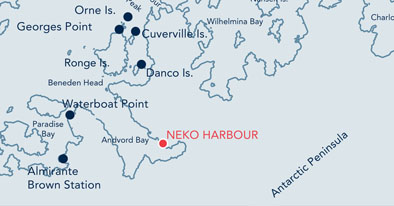
7. Neko Harbour |
||||||||||||

|
||||||||||||
|---|---|---|---|---|---|---|---|---|---|---|---|---|
|
||||||||||||
|
||||||||||||
| Description | ||||||||||||
| TOPOGRAPHY | ||||||||||||
| A beach and small rocky outcrop on the shore of Neko Harbour, backed by towering peaks and surrounded by glaciers which are heavily crevassed. Ice in many forms is present in Andvord Bay, and conditions can be quite dynamic. The glaciers surrounding the bay regularly calve. | ||||||||||||
| FAUNA | ||||||||||||
| Confirmed breeders: Gentoo penguin, Kelp gull, Skua. | ||||||||||||
| Regularly haul out: Weddell seal. | ||||||||||||
| FLORA | ||||||||||||
| Swards of moss species, the green alga Prasiola crispa and snow algae. | ||||||||||||
| OTHER | ||||||||||||
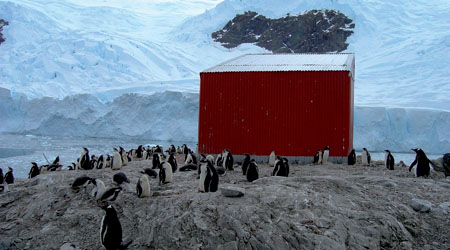
| The foundations of an Argentine refuge hut are still visible. Following weather damage in 2010 the hut was removed and the site cleared. | ||||||||||||
| Visitor Impact | ||||||||||||
| KNOWN IMPACTS | ||||||||||||
| None. | ||||||||||||
| POTENTIAL IMPACTS | ||||||||||||
| Disturbance to wildlife. | ||||||||||||
| Landing Requirements | ||||||||||||
| SHIPS* | ||||||||||||
|
Max pax on board: 500
Ships at a time: 1 Comments: Maximum 3 ships per day (midnight to midnight), of which no more than 2 can carry over 200 passengers. * A ship is defined as a vessel which carries more than 12 passengers. |
||||||||||||
| VISITORS | ||||||||||||
|
Maximum number of visitors at any time, exclusive of expedition guides and leaders: 100 Visitors per guide: 20 Comments: No visitors ashore between 22:00hrs and 04:00hrs (local time), except for those engaged in organised overnight stays. This is in order to establish a resting period for the wildlife. |
||||||||||||
| Visitor Area | ||||||||||||
| LANDING AREA | ||||||||||||
|
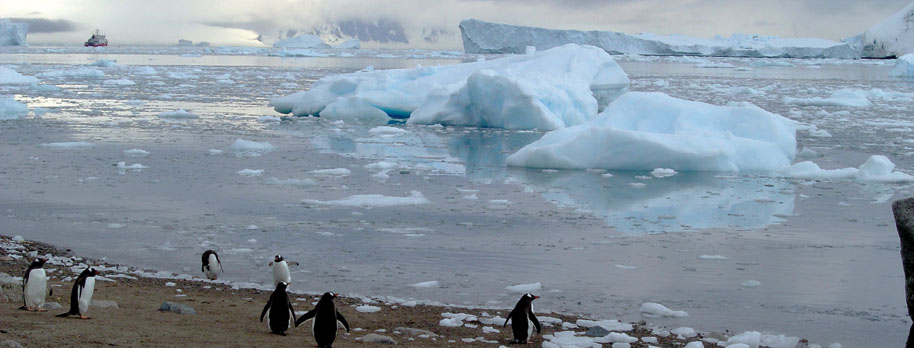
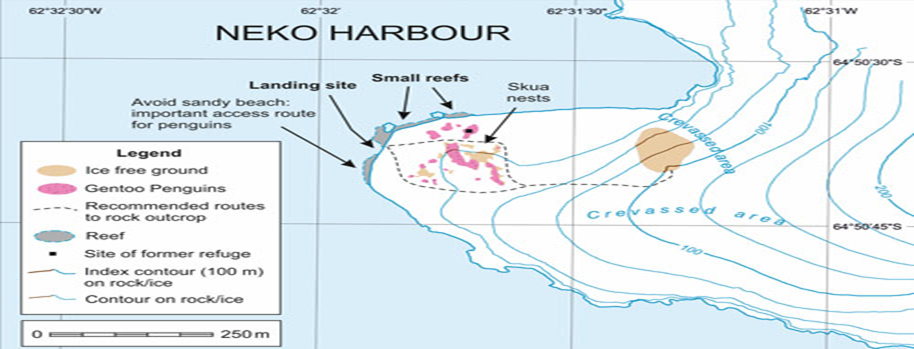
After disembarking visitors should quickly seek higher ground to avoid possible waves produced by glacial calving. One potential landing site is the cobble beach on the southwest side of the large boulder, by a small reef. Avoid the inner stretch of beach leading to the glacier due to the risk of dangerous waves resulting from glacier calving. Avoid also the sandy beach due west of the penguin colony which is an important access route for penguins. A second potential landing site is on the south side of the sandy beach mentioned above. This site may be more suitable under the following conditions: 1. Mid-season once the colony is well-established, there are a large amount of gentoo nests on the sandy beach above the high tide line. This blocks access to the first landing site on the cobble beach, and landing should be done only to the south of the sandy beach if there is access around the colony. 2. If there is a high concentration of ice – either from glacial calving or iceberg disintegration – surrounding the cobble beach, it may not be accessible. Early in the season there may be enough snow on the southern area of the point to allow for landing on a boulder and digging snow steps to access the standard walking and roaming areas |
||||||||||||
| CLOSED AREA | ||||||||||||
| There is a possible nesting area for skuas in the vicinity of the rocks at the rocky outcrop lookout point. Maintain sufficient distance. | ||||||||||||
| GUIDED WALKING AREA | ||||||||||||
|
Walks up the permanent snow bank to the higher rocky outcrop overlooking the glacier and landing site must be carefully assessed, guided or marked, as surrounding snow and ice areas are crevassed and dangerous. Once the gentoo colony is established, a full loop route marked on the map is no longer possible. The northern portion of the loop is a major penguin highway and nesting region that should not be accessed by visitors. At this point, the route should be two branching out-and-back walks, each ending with a view of the lower and upper portions of the colony, respectively. |
||||||||||||
| FREE ROAMING AREA | ||||||||||||
| Visitors can roam freely, but under supervision. | ||||||||||||
| Visitor code of conduct | ||||||||||||
| BEHAVIOUR ASHORE | ||||||||||||
|
||||||||||||
| Comments: | ||||||||||||
| Restricted Zones: There is a possible nesting area for skuas in the vicinity of the rocks at the rocky outcrop lookout point. Maintain sufficient distance. | ||||||||||||
| CAUTIONARY NOTES | ||||||||||||
|
Be aware that glacier calving may produce dangerous waves. Avoid the beach or be prepared to evacuate quickly up the hill. The route to the higher rocky outcrop skirts areas are heavily crevassed and extremely dangerous. Report any signs of crevasses to IAATO (shipscheduler@iaato.org) at your earliest possible opportunity. Routes to higher rocky outcrop should only be assessed by appropriately trained mountain guides with appropriate equipment. |
||||||||||||
|
||||||||||||
| Neko Harbour landing beach | ||||||||||||
|
||||||||||||
|
||||||||||||
|
|
Please note that ATCM / CEP circulars are available only to specific contact points.
Please contact your Party Contact Administrator, to confirm if you have privileges to access this section.
To access this section you must log in using your personal Username/Email and password as registered in the AT Contacts Database.
To access this section you must log in using your personal Username/Email and password as registered in the AT Contacts Database.
If you are not registered, please request your party’s Contact Administrator to assign your credentials or contact the Secretariat for assistance.