40. Astrolabe Island |
||||||||||||

|
||||||||||||
|---|---|---|---|---|---|---|---|---|---|---|---|---|
|
||||||||||||
|
||||||||||||
| Description | ||||||||||||
| TOPOGRAPHY | ||||||||||||
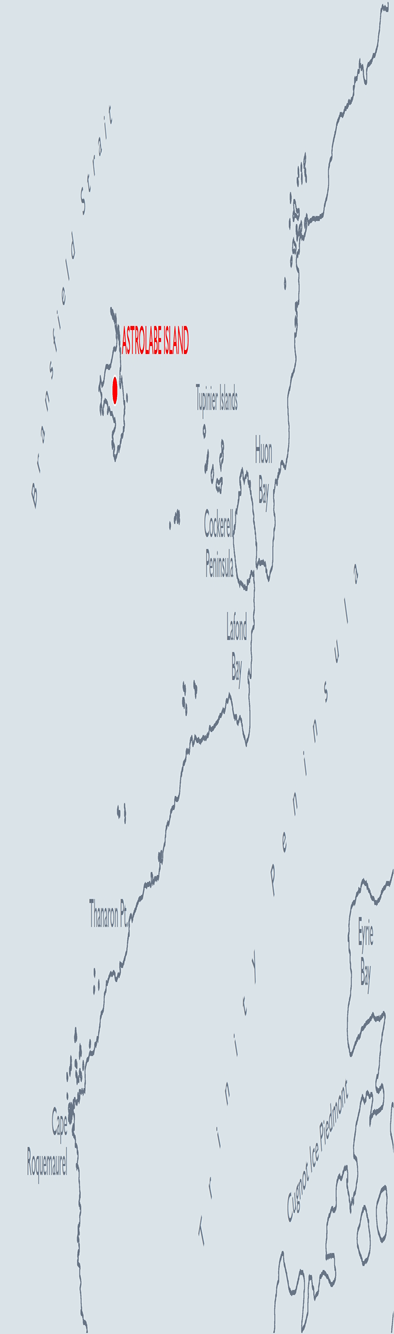
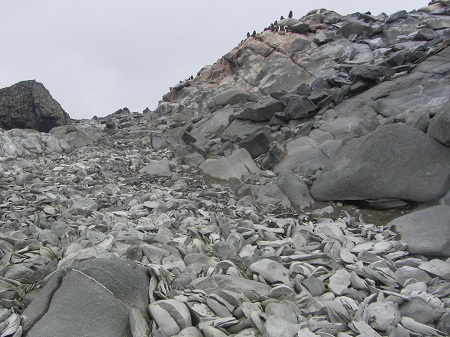
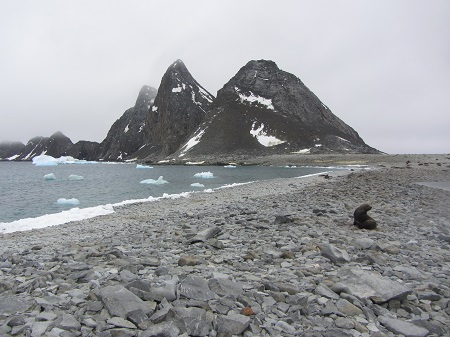
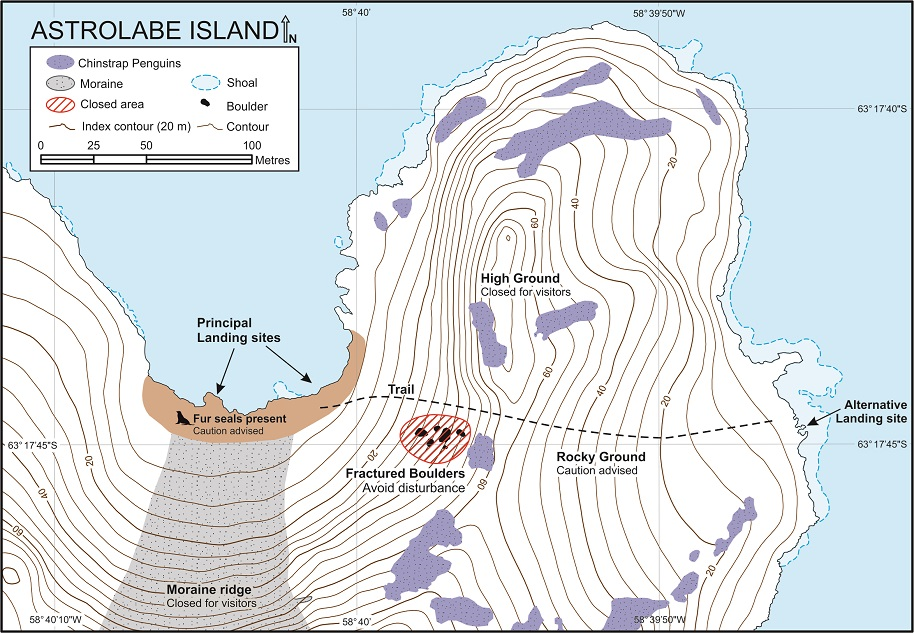
| A 3 mile long island situated 14 miles NW off of Cape Ducorps on the Trinity Peninsula. Beach on the northern shore of Astrolabe Island. A small fractured boulder field of weathered rocks lies on the path between the beach and the penguin colony. | ||||||||||||
| FAUNA | ||||||||||||
| Confirmed breeders: Antarctic Fulmar, chinstrap Penguin, Wilson’s storm petrel. | ||||||||||||
| Hauled out: Antarctic fur seal. | ||||||||||||
| Offshore: Leopard seal. | ||||||||||||
| Suspected Breeders: Blue-eyed shag, Skua. | ||||||||||||
| FLORA | ||||||||||||
| Various crustose and fruticose lichens | ||||||||||||
| Visitor Impact | ||||||||||||
| KNOWN IMPACTS | ||||||||||||
| None identified | ||||||||||||
| POTENTIAL IMPACTS | ||||||||||||
|
Disturbance of wildlife. Damage to fractured boulders field, repeated walking over the field will dislodge the plates of rock so that eventually the cracked boulder effect will be lost. |
||||||||||||
| Landing Requirements | ||||||||||||
| SHIPS* | ||||||||||||
|
Max pax on board: 500
Ships per day: 2 |
||||||||||||
| VISITORS | ||||||||||||
|
Maximum number of visitors at any time, exclusive of expedition guides and leaders: 100 Visitors per guide: 20 Curfew time period (from/to), in order to establish a rest period for wildlife: 22:00-04:00 Comments: 50 visitors only at any one time on walk to chinstrap colony. |
||||||||||||
| Visitor Area | ||||||||||||
| LANDING AREA | ||||||||||||
|
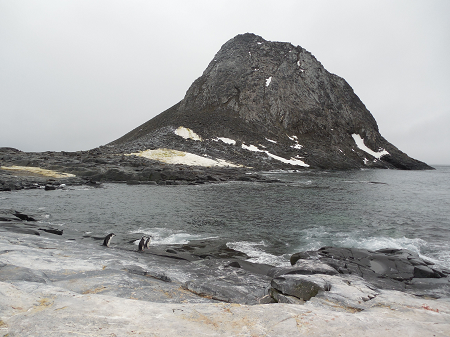
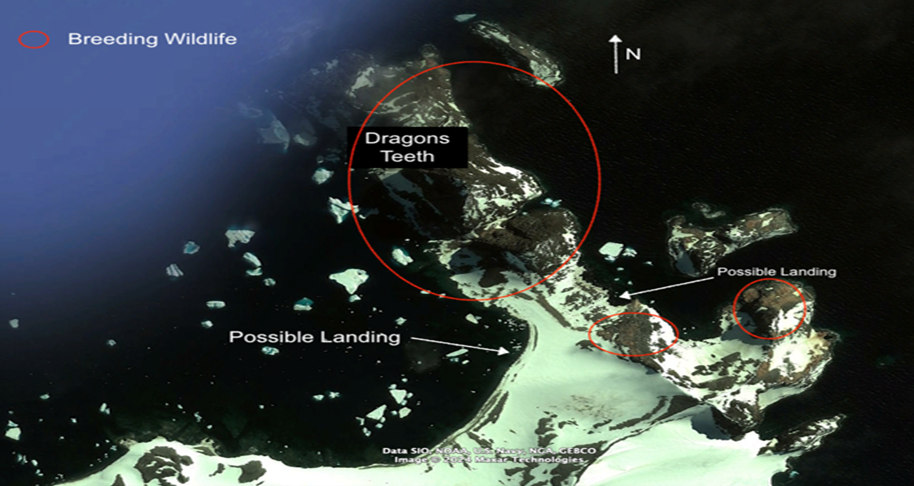
Primary landing site – either end of main crescent shaped beach on eastern side of small rocky peninsula, rocks behind the beach contain chinstrap penguin colony. Antarctic fur seals are likely to be present in late season making landing difficult. Secondary landing site - Opposite side of peninsula on the rocky shore below the penguin colony. Extreme caution should be taken on very slippery rocks. |
||||||||||||
| CLOSED AREA | ||||||||||||
| Small area of fractured boulders on the walk from primary landing site to the penguin colony. Can be skirted on the lower rocks. | ||||||||||||
| GUIDED WALKING AREA | ||||||||||||
| Short walk from the beach up the rocks to chinstrap penguin colony, avoiding the closed area. Only 50 at a time on the walk, which should be marked and closely guided. Do not walk up into the scree slopes where birds are nesting. | ||||||||||||
| FREE ROAMING AREA | ||||||||||||
| Visitors are free to roam on the upper shore of the long stony landing beach. | ||||||||||||
| Visitor code of conduct | ||||||||||||
| BEHAVIOUR ASHORE | ||||||||||||
|
||||||||||||
| CAUTIONARY NOTES | ||||||||||||
|
• Be careful of hidden rocks on approach to landing sites. Ice conditions on approach to the beach can change rapidly – extreme caution should be used in approaching and departing the island. • Be extremely careful walking on rocks, especially close to the secondary landing site, which are very slippery and covered in guano. |
||||||||||||

|
||||||||||||
|
||||||||||||
|
||||||||||||
|
Please note that ATCM / CEP circulars are available only to specific contact points.
Please contact your Party Contact Administrator, to confirm if you have privileges to access this section.
To access this section you must log in using your personal Username/Email and password as registered in the AT Contacts Database.
To access this section you must log in using your personal Username/Email and password as registered in the AT Contacts Database.
If you are not registered, please request your party’s Contact Administrator to assign your credentials or contact the Secretariat for assistance.