19. Baily Head, Deception Island |
||||||||||||

|
||||||||||||
|---|---|---|---|---|---|---|---|---|---|---|---|---|
|
||||||||||||
|
||||||||||||
| Description | ||||||||||||
| TOPOGRAPHY | ||||||||||||
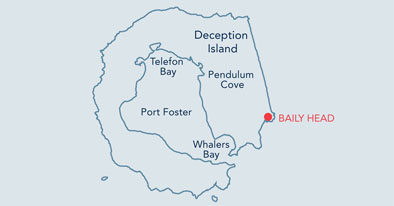
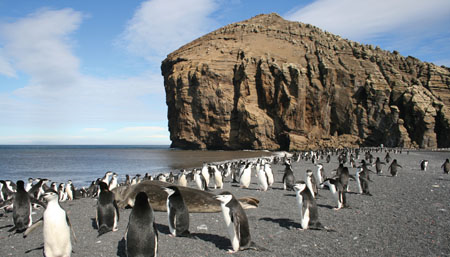
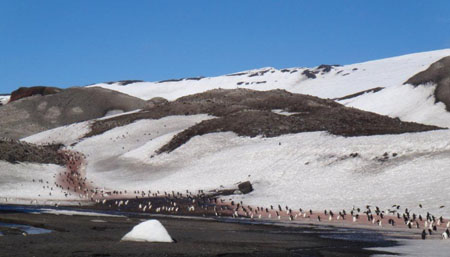
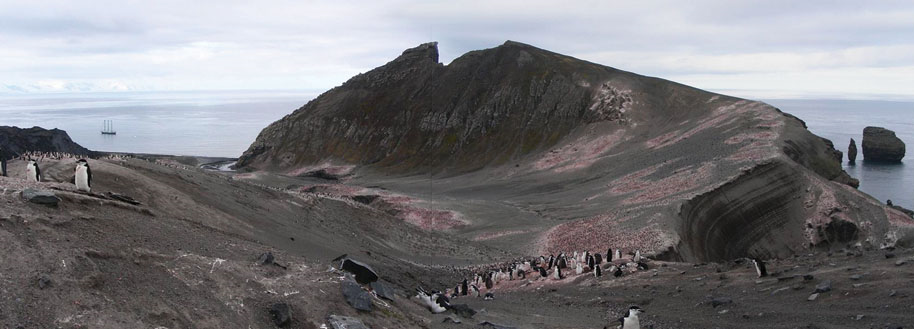
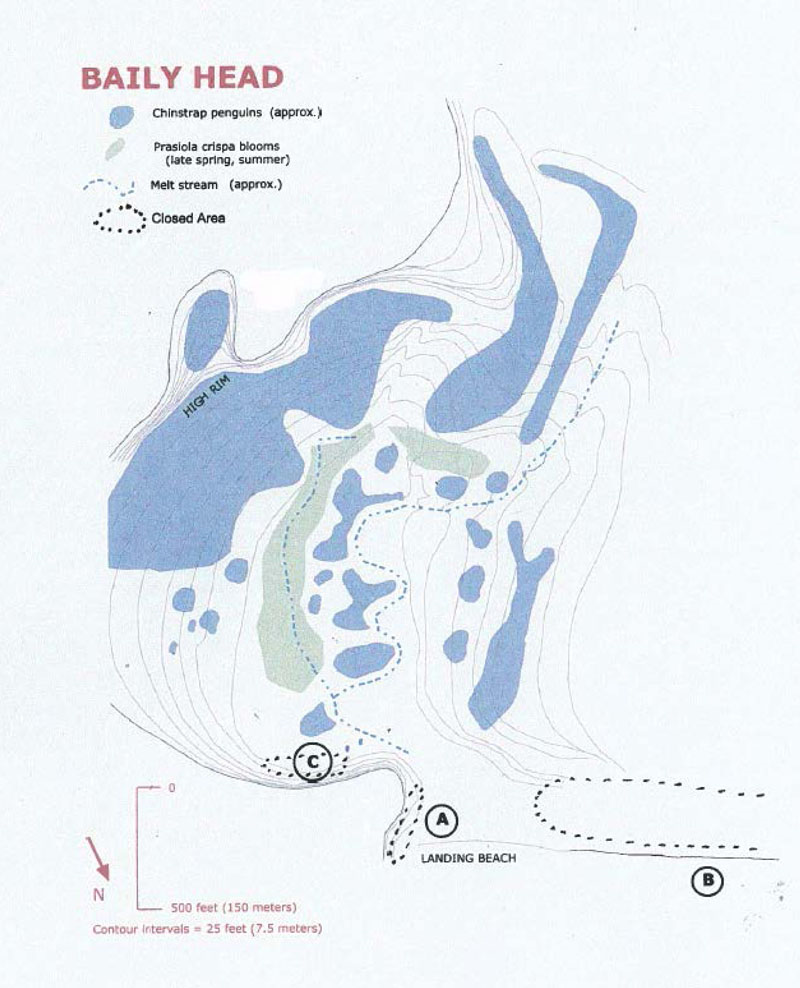
| Baily Head is a rocky headland exposed to the Bransfield Strait on the south east coast of Deception Island. The site comprises the southern end of a long linear beach which runs along most of the eastern side of Deception Island, and a narrow valley that rises steeply inland to a semi-circular ridgeline, giving the impression of a natural ‘amphitheatre’. It is bounded to the north by a large glacier and to the south by the cliffs of Baily Head. A substantial melt stream runs through the centre of the valley during the austral summer. During the breeding season, along the sides of the meltstream, there is a penguin “highway,” with many penguins heading downhill to sea, and many going uphill, returning to their nests. | ||||||||||||
| FAUNA | ||||||||||||
| Confirmed breeders: Brown skua, Cape petrel, chinstrap Penguin, Snowy sheathbill. | ||||||||||||
| Regularly haul out: Antarctic fur seal. | ||||||||||||
| Suspected Breeders: Southern giant petrel. | ||||||||||||
| Also present: Southern giant petrel. | ||||||||||||
| FLORA | ||||||||||||
| The green alga Prasiola crispa is abundant at Baily Head. Four species of lichen, six species of moss and the flowering Antarctic pearlwort (Colobanthus quitensis) have also been recorded. | ||||||||||||
| OTHER | ||||||||||||
| Baily Head comprises part of the Deception Island Antarctic Specially Managed Area No 4. | ||||||||||||
| Visitor Impact | ||||||||||||
| KNOWN IMPACTS | ||||||||||||
| None. | ||||||||||||
| POTENTIAL IMPACTS | ||||||||||||
| Disturbance of wildlife, in particular as visitor space is limited. Trampling of vegetation, and trail formation. The chinstrap colony is currently declining and may be more susceptible to disturbance. | ||||||||||||
| Landing Requirements | ||||||||||||
| SHIPS* | ||||||||||||
|
Max pax on board: 200
Ships per day: 2 Comments: * A ship is defined as a vessel which carries more than 12 passengers. |
||||||||||||
| VISITORS | ||||||||||||
|
Maximum number of visitors at any time, exclusive of expedition guides and leaders: 100 Visitors per guide: 20 Curfew time period (from/to), in order to establish a rest period for wildlife: 22:00-04:00 |
||||||||||||
| Visitor Area | ||||||||||||
| LANDING AREA | ||||||||||||
| Beach immediately in front of penguin colony. Note that the landing beach is susceptible to heavy swell and surf that can make landings impossible. | ||||||||||||
| CLOSED AREA | ||||||||||||
|
Closed Area A: the foot of the rock cliffs to avoid falling rock. Closed Area B: the glacier front to avoid falling ice. Closed Area C: the upper slopes on the steep southern side of Baily Head to avoid rock and soil disturbance and damage to vegetation. |
||||||||||||
| GUIDED WALKING AREA | ||||||||||||
| Visits to the colony should be in small closely supervised groups of no more than 15 visitors which are well spaced with at least one guide per group. Each group should follow the same route. Visitors need to be guided in groups of no more than 15 and very closely supervised when passing through the narrow corridor that runs alongside the main melt stream between the colony and the beach. Visitors must remain outside the natural ‘boundary’ of discrete breeding groups. | ||||||||||||
| FREE ROAMING AREA | ||||||||||||
| Visitors may roam freely in the landing beach area between the cliffs and the edge of the penguin highway, taking care to maintain sufficient distance from the birds to avoid displacement. Visitors should give penguins the right of way. | ||||||||||||
| Visitor code of conduct | ||||||||||||
| BEHAVIOUR ASHORE | ||||||||||||
|
||||||||||||
| CAUTIONARY NOTES | ||||||||||||
| Large swell and strong winds can make landings and pick up of passengers extremely hazardous. Landings should only be undertaken when safe to do so. Once ashore, remain vigilant to changes in sea state and weather conditions at the landing site and safe return to vessels. Beware of falling rock in the vicinity of Closed Areas A and B. | ||||||||||||
|
||||||||||||
|
||||||||||||
|
||||||||||||
|
|
Please note that ATCM / CEP circulars are available only to specific contact points.
Please contact your Party Contact Administrator, to confirm if you have privileges to access this section.
To access this section you must log in using your personal Username/Email and password as registered in the AT Contacts Database.
To access this section you must log in using your personal Username/Email and password as registered in the AT Contacts Database.
If you are not registered, please request your party’s Contact Administrator to assign your credentials or contact the Secretariat for assistance.