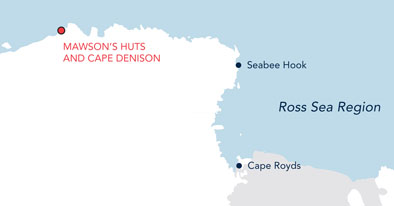
32. Mawson’s Huts and Cape Denison |
||||||||||||

|
||||||||||||
|---|---|---|---|---|---|---|---|---|---|---|---|---|
|
||||||||||||
|
||||||||||||
| Description | ||||||||||||
| TOPOGRAPHY | ||||||||||||
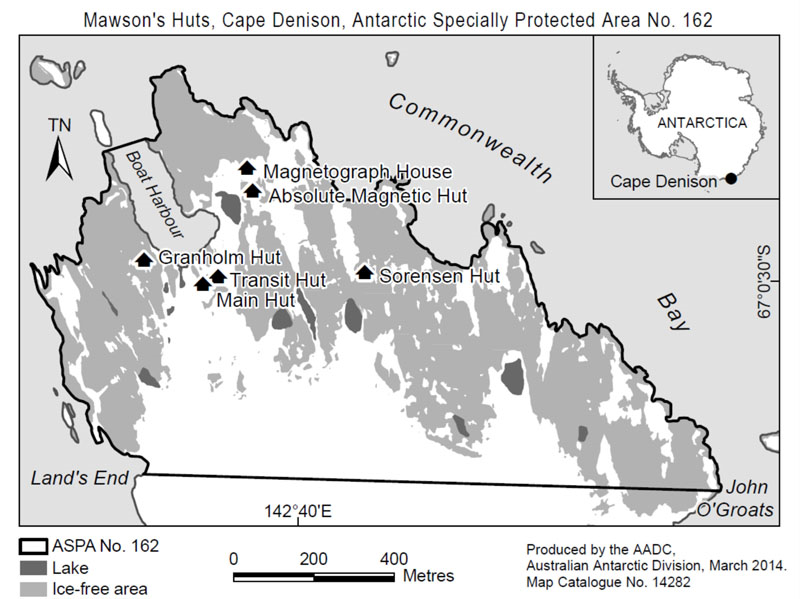
| Cape Denison is a largely ice-free peninsula adjacent to the polar plateau. The cape consists of rocky ridges and valleys. The Antarctic Specially Protected Area (ASPA) extends from Land’s End to John O’Groats, and south to the moraine line. | ||||||||||||
| FAUNA | ||||||||||||
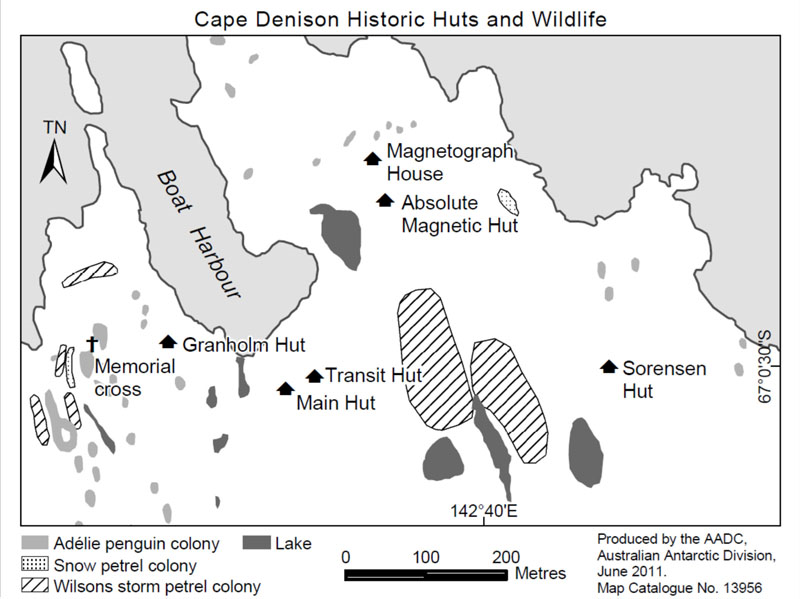
| Confirmed breeders: Adélie penguin, Snow petrel, South Polar Skua, Wilson’s storm petrel. | ||||||||||||
| Regularly haul out: Elephant seal, Leopard seal, Weddell seal. | ||||||||||||
| Also present: Antarctic petrel, Cape petrel, Emperor penguin, Southern giant petrel. | ||||||||||||
| FLORA | ||||||||||||
| 13 lichen species, and non-marine algae have been recorded in the area. | ||||||||||||
| HISTORIC HUTS AND ARTIFACTS | ||||||||||||
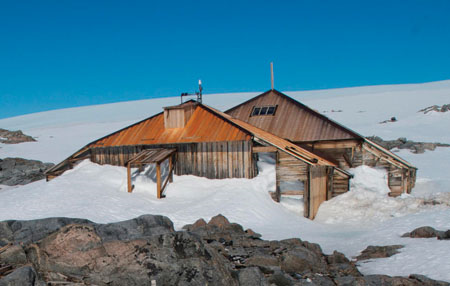
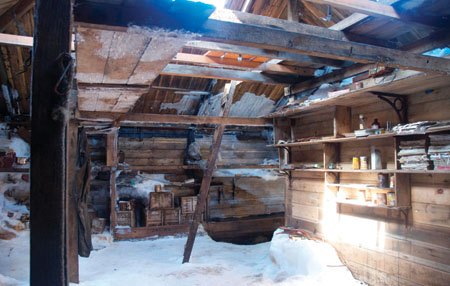
| Four huts from the Australasian Antarctic Expedition of 1911-1914 stand at Cape Denison: the Main Hut and the Magnetograph House which are intact; and the Absolute Magnetic Hut and Transit Hut which are standing ruins. Also present are remains of scientific instruments and installations, wireless masts, a memorial cross, and scatters of artefacts. Three newer huts are used for research and management activities, or in case of emergency. | ||||||||||||
| Visitor Impact | ||||||||||||
| KNOWN IMPACTS | ||||||||||||
| Disturbance of artefacts and wildlife. | ||||||||||||
| POTENTIAL IMPACTS | ||||||||||||
| Damage or disturbance to artefacts or structures through touching and other handling, theft and trampling. Deterioration of hut fabric and artefacts associated with increased humidity levels inside the huts. Fire. Disturbance of wildlife and damage to vegetation. | ||||||||||||
| Landing Requirements | ||||||||||||
| VISITORS | ||||||||||||
|
Comments: In accordance with the ASPA 162 Management Plan, those proposing to visit require a permit issued by an appropriate national authority, and should inform the Australian national program as far in advance of a visit as is practicable. Detailed illustrated instructions for access to the huts and securing them on departure are available (tourism@aad.gov.au). Where authorised in a permit, visitors may enter the Main Hut and Magnetograph House located within the ASPA under the supervision of a hut guide (with approved cultural heritage skills) appointed by an appropriate national authority. A maximum entry number of 4 people at a time (including the guide) applies inside the Main Hut, and a maximum of 3 people (including the guide) applies inside the Magnetograph Hut. Visits may occur only after visitors have received a briefing on the management plans and the values of the site. Artefact-rich areas (in particular the scatter immediately to the north of the Main Hut), bird colonies, areas of lichen, and routes used by penguins between nesting sites and the sea must be avoided. Visitors accessing the Memorial Cross should follow a route that avoids disturbance to the Adelie penguins and petrels nesting in the vicinity. For large groups this may require direct supervision of visitors and/or the temporary marking of an appropriate route using canes or similar. |
||||||||||||
| Visitor Area | ||||||||||||
| LANDING AREA | ||||||||||||
| Boat landing options may include Boat Harbour, and due north of the Sorenson Hut. The ASPA management plan designates a helicopter landing site and approach paths. | ||||||||||||
| CLOSED AREA | ||||||||||||
| Access to ASPA 162 Mawson’s Huts, Cape Denison , including the historic huts, may only occur in accordance with the ASPA management plan, under a permit issued by a national authority. The other huts within the ASPA may only be entered for emergency use. | ||||||||||||
| Visitor code of conduct | ||||||||||||
| BEHAVIOUR ASHORE | ||||||||||||
|
||||||||||||
| CAUTIONARY NOTES | ||||||||||||
| Boat landings are frequently hampered by heavy seas and prevailing or katabatic winds. Wet rocks, ice and snow mean that caution is required in disembarking boats and walking around this site. Caution must also be taken inside the huts because of icy conditions. | ||||||||||||

|
||||||||||||
|
||||||||||||
|
||||||||||||
|
Please note that ATCM / CEP circulars are available only to specific contact points.
Please contact your Party Contact Administrator, to confirm if you have privileges to access this section.
To access this section you must log in using your personal Username/Email and password as registered in the AT Contacts Database.
To access this section you must log in using your personal Username/Email and password as registered in the AT Contacts Database.
If you are not registered, please request your party’s Contact Administrator to assign your credentials or contact the Secretariat for assistance.