21. Cape Royds |
||||||||||

|
||||||||||
|---|---|---|---|---|---|---|---|---|---|---|
|
||||||||||
|
||||||||||
| Description | ||||||||||
| TOPOGRAPHY | ||||||||||
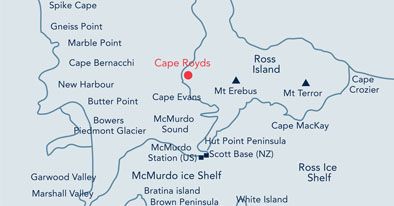
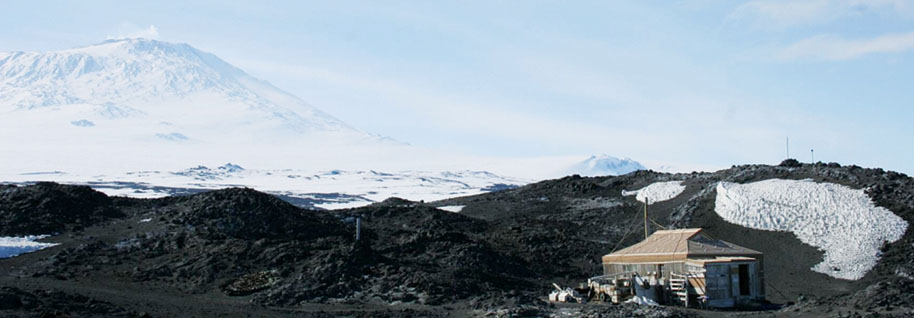
| Cape Royds is a strip of phonolitic, ice free land on the western most point of Ross Island. Mt Erebus is the dominant feature on the landscape, and is responsible for the volcanic geology of the Cape. | ||||||||||
| FAUNA | ||||||||||
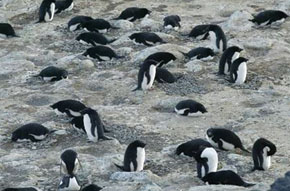
| Confirmed breeders: Adélie penguin, South Polar Skua. | ||||||||||
| Regularly haul out: Weddell seal. | ||||||||||
| Seen near-shore: Antarctic petrel, Emperor penguin, Leopard seal, Snow petrel. | ||||||||||
| FLORA | ||||||||||
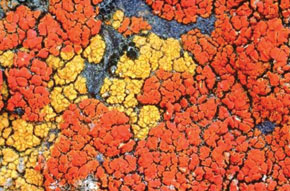
| The southernmost recorded green snow algae in the Ross Sea region occur near the penguin colony at Cape Royds. Crustose lichens, common only in a few sites in the region have been recorded in the area. | ||||||||||
| OTHER | ||||||||||
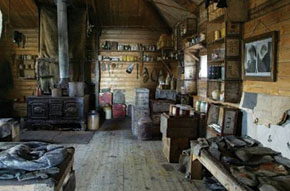
| Cape Royds is one of the principal areas of early human activity in Antarctica. The hut built by the British Antarctic Nimrod Expedition remains at Cape Royds as an important symbol of the heroic era of Antarctic Exploration. Numerous artefacts are distributed around the Cape. | ||||||||||
| Visitor Impact | ||||||||||
| KNOWN IMPACTS | ||||||||||
| Disturbance to the penguin colony, disturbance to historic artefacts, cumulative effects of human presence in and around the hut, tracking and ground compaction. | ||||||||||
| POTENTIAL IMPACTS | ||||||||||
| Disturbance to sensitive flora and fauna communities, damage to hut and associated artefacts, fire, importation of non-native species, litter, disturbance to research, tracking and ground compaction, noise. | ||||||||||
| Landing Requirements | ||||||||||
| SHIPS* | ||||||||||
|
Max pax on board: 200
Ships per day: 2 Comments: * A ship is defined as a vessel which carries more than 12 passengers. |
||||||||||
| VISITORS | ||||||||||
|
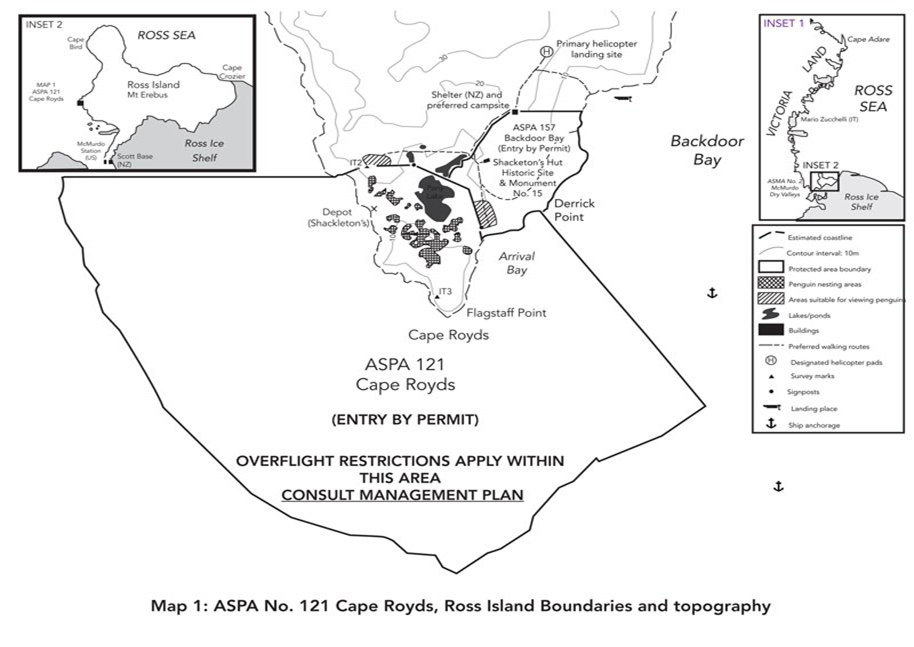
Maximum number of visitors at any time, exclusive of expedition guides and leaders: 100 Comments: Entry into ASPA 157 and 121 is prohibited except in accordance with a permit which must be carried on site. Permits to enter ASPA 121 will not be given for recreational visits; visitors to ASPA 157 must avoid ASPA 121. The annual max. number of visitors into ASPA 157 is 2000, the max. number of people in ASPA 157 at any one time is 40, and the max. number of people inside the hut at any one time is 8 people (inclusive of guides and expedition leaders). All visits to ASPA 157 must be accompanied by an experienced guide. Consult the ASPA Management Plans and permits for further information. |
||||||||||
| Visitor Area | ||||||||||
| LANDING AREA | ||||||||||
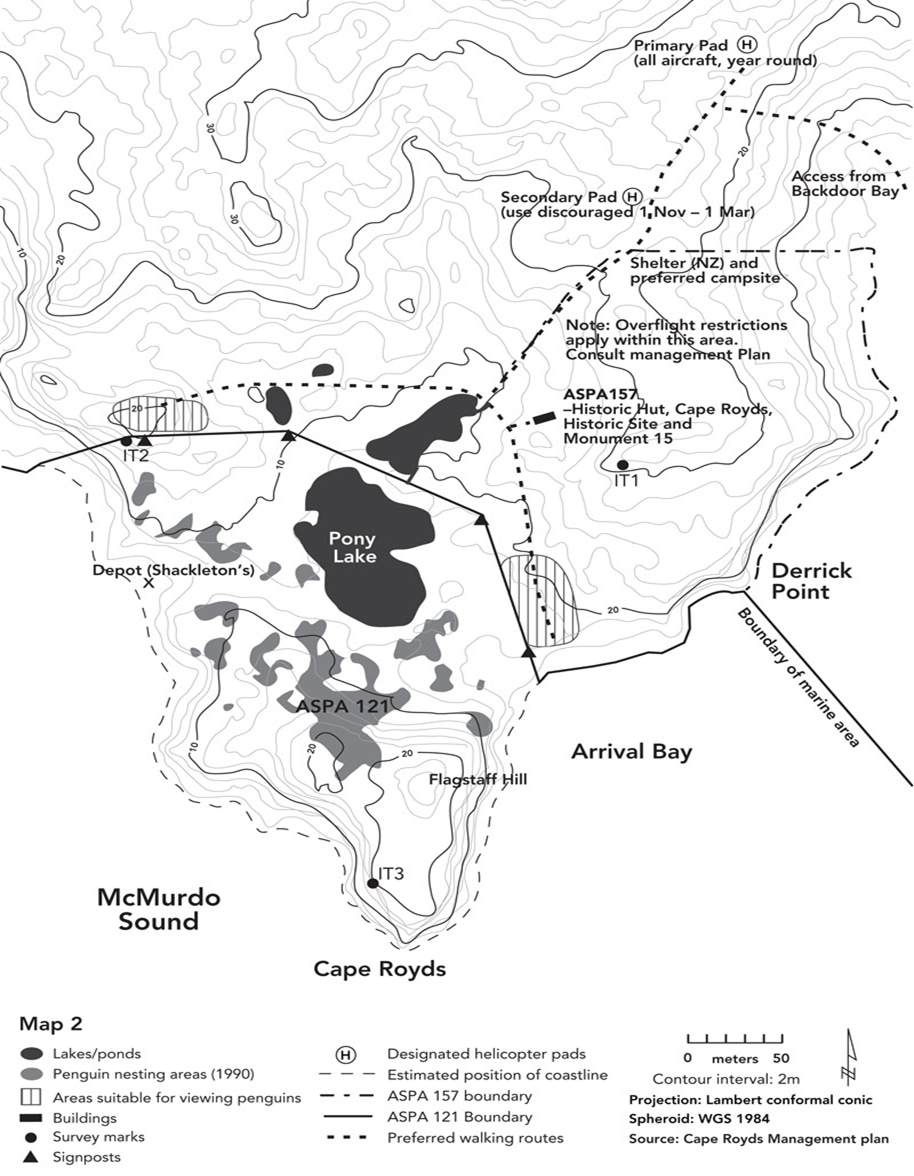
| Access by foot or small boat should be made from Backdoor Bay (taking care to avoid the marine extent of ASPA 121) following the walking route depicted in map 2. Helicopters should land at the primary landing pad (166˚10’22.9E, 77˚33’03.5S, see map 2), 250m northeast of the northern point of Pony Lake. Over flight of ASPA 121 is prohibited for single engine helicopters below 750m (2,500’) and for dual engine helicopters below 1,000m (3,300’). Minimum horizontal approach to ASPA 121 is 500m (1,600’) for single and 750m (2,500’) for dual engine helicopters. | ||||||||||
| CLOSED AREA | ||||||||||
| ASPAs are closed except to permit holders. Permit holders must be careful to adhere to the requirements and visitor numbers specified in the management plans. | ||||||||||
| GUIDED WALKING AREA | ||||||||||
| Visitors entering the hut must be accompanied by a guide. Particular care should be taken when guiding passengers along the preferred walking routes to the areas suitable for viewing penguins, to the helicopter landing site and to Backdoor Bay to avoid skua nesting sites and vegetation and to ensure visitors stay on the preferred walking routes. | ||||||||||
| Visitor code of conduct | ||||||||||
| BEHAVIOUR ASHORE | ||||||||||
|
||||||||||
| CAUTIONARY NOTES | ||||||||||
| Be aware of the ASPA boundaries, especially the boundary between the ASPAs and the marine extent of ASPA 121 | ||||||||||
|
||||||||||
|
||||||||||
|
||||||||||
|
Please note that ATCM / CEP circulars are available only to specific contact points.
Please contact your Party Contact Administrator, to confirm if you have privileges to access this section.
To access this section you must log in using your personal Username/Email and password as registered in the AT Contacts Database.
To access this section you must log in using your personal Username/Email and password as registered in the AT Contacts Database.
If you are not registered, please request your party’s Contact Administrator to assign your credentials or contact the Secretariat for assistance.