43. Cape Evans |
||||||||||||

|
||||||||||||
|---|---|---|---|---|---|---|---|---|---|---|---|---|
|
||||||||||||
|
||||||||||||
| Description | ||||||||||||
| TOPOGRAPHY | ||||||||||||
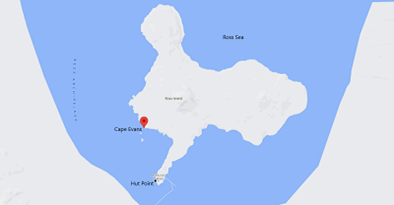
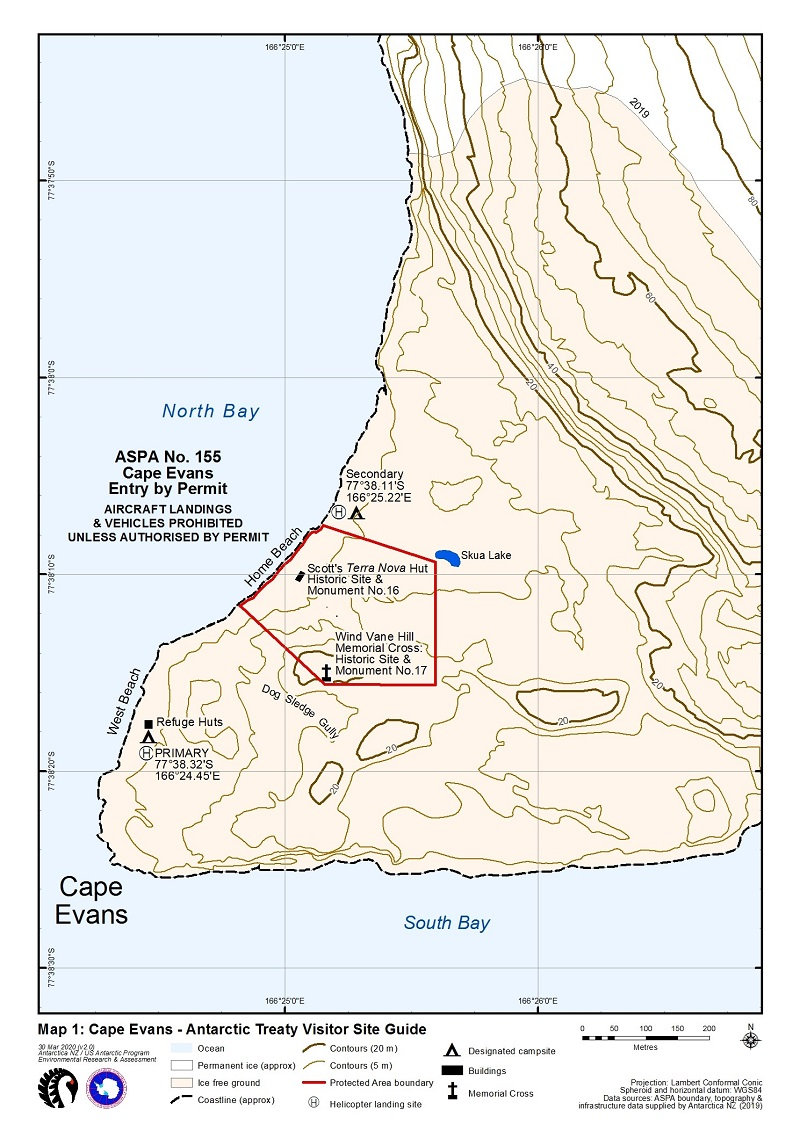
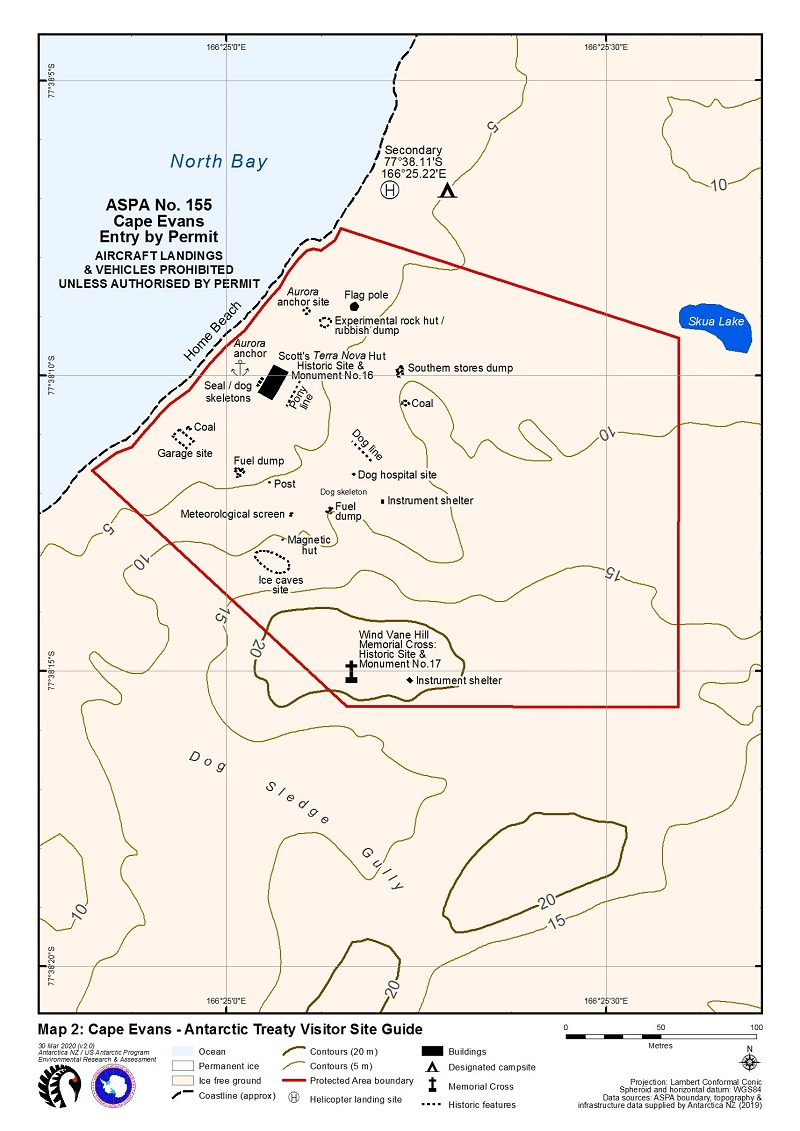
| Cape Evans is a small, triangular and low-lying ice free area of volcanic origin on the southwestern coast of Ross Island, ~10 kilometres south of Cape Royds (Map 1). Scott’s Terra Nova Hut is located ~30 m from the coast at Home Beach, North Bay (Map 2). Wind Vane Hill (20 m) lies ~150 m southeast of the hut. Mt Erebus (3795 m), an active volcano, lies ~22 km northeast of Cape Evans. | ||||||||||||
| FAUNA | ||||||||||||
| Confirmed breeders: South Polar Skua. | ||||||||||||
| Regularly haul out: Weddell seal. | ||||||||||||
|
Other: Adélie penguins (Pygoscelis adeliae), emperor penguins (Aptenodytes forsteri), snow petrels (Pagodroma nivea), and Antarctic petrel (Thalassoica antarctica) are commonly observed in the area, although do not breed at Cape Evans. Leopard seals (Hydrurga leptonyx) may occasionally be seen. |
||||||||||||
| FLORA | ||||||||||||
|
Crustose lichens have been recorded on Cape Evans. |
||||||||||||
| OTHER | ||||||||||||
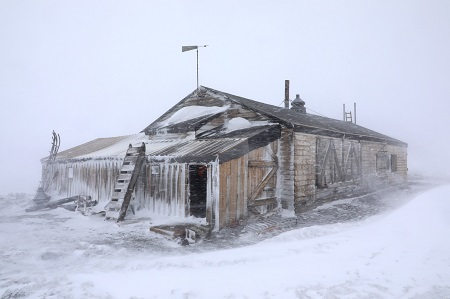
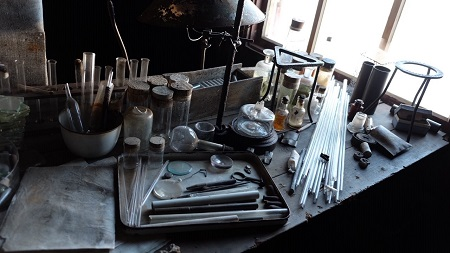
| Cape Evans is one of the principal areas of early human activity in Antarctica. The hut built by Scott’s Terra Nova Expedition 1910-13 remains as an important symbol of the heroic era of Antarctic exploration and has been designated Historic Site and Monument (HSM) No. 16. Numerous artefacts remain in the hut and in the surrounding area. The memorial cross (HSM No. 17) on Wind Vane Hill commemorates three members of Shackleton’s Ross Sea party who died in 1916. | ||||||||||||
| Visitor Impact | ||||||||||||
| KNOWN IMPACTS | ||||||||||||
| Disturbance to historic artefacts, cumulative effects of human presence in and around the hut, tracking and ground compaction. Disturbance to skuas and seals. | ||||||||||||
| POTENTIAL IMPACTS | ||||||||||||
| Damage to hut and associated artefacts, fire, importation of non-native species, litter, disturbance to research, tracking and ground compaction, noise. Disturbance to sensitive fauna and flora communities. Release of asbestos (currently contained within Magnetic hut, which is covered). Fragments of asbestos or other materials may be scattered around the site. | ||||||||||||
| Landing Requirements | ||||||||||||
| SHIPS* | ||||||||||||
|
Comments: No current limit on ships, although visitor numbers are subject to the limits set below. Comments: * A ship is defined as a vessel that carries more than 12 passengers. |
||||||||||||
| VISITORS | ||||||||||||
|
Comments: Entry into ASPA No. 155 is prohibited except in accordance with a permit which must be carried on site. All visitors to ASPA No. 155 must be accompanied by a trained guide. Consult the ASPA Management Plan and permit for further information. The historic hut is locked and a key must be obtained as part of the permitting process. • Annual max. number of visitors into ASPA 155 (including guides): 2000 people. • Max. number of people in ASPA No. 155 at any one time (including guides and those within the hut): 40 people. • Max. number of people inside the hut at any one time (including guides): 8 people. |
||||||||||||
| Visitor Area | ||||||||||||
| LANDING AREA | ||||||||||||
|
The historic site at Cape Evans may be accessed by first travelling to the cape area adjacent to but outside of the boundaries of ASPA No. 155 by either helicopter, vehicle, small boat, or on foot (Map 1). Access into and within the ASPA shall be on foot. Specific paths or routes of access, or small boat landing sites, are not defined. Vehicles are prohibited on land at Cape Evans unless specifically authorised by permit, and any vehicles used to access Cape Evans must be parked on adjacent sea ice. Helicopter landings within ASPA No. 155 are prohibited, and overflights should be avoided. Helicopters may land at the Primary landing site (77° 38.32' S 166° 24.45' E) ~350 m southwest of Scott’s hut (Map 1), from where access shall be on foot. The Secondary helicopter landing site is for support of conservation and management only. |
||||||||||||
| CLOSED AREA | ||||||||||||
|
• ASPAs are closed except to permit holders. Permit holders must be careful to adhere to the requirements and visitor numbers specified in the Management Plan for ASPA No. 155. • The Magnetic Hut located on Wind Vane Hill and 80 m south of Scott’s Terra Nova hut is closed for safety reasons (presence of asbestos). The hut is locked and enclosed by a protective covering. • Refuge huts for science / conservation support are closed to visitors. |
||||||||||||
| GUIDED WALKING AREA | ||||||||||||
| Visitors entering ASPA No. 155 must be accompanied by a guide. Particular care should be taken when walking around the area to avoid historic artefacts still present on the ground, vegetation and skua nesting sites, which may be difficult to see. | ||||||||||||
| FREE ROAMING AREA | ||||||||||||
| Visitors may roam freely under supervision outside of the boundaries of ASPA No. 155 (Map 1). The Visitor Code of Conduct (below) shall be followed at all times. In particular, care should be exercised to avoid nesting skuas, any vegetation, and any scientific installations or camps in the area. | ||||||||||||
| Visitor code of conduct | ||||||||||||
| BEHAVIOUR ASHORE | ||||||||||||
|
||||||||||||
| CAUTIONARY NOTES | ||||||||||||
|
||||||||||||
|
||||||||||||
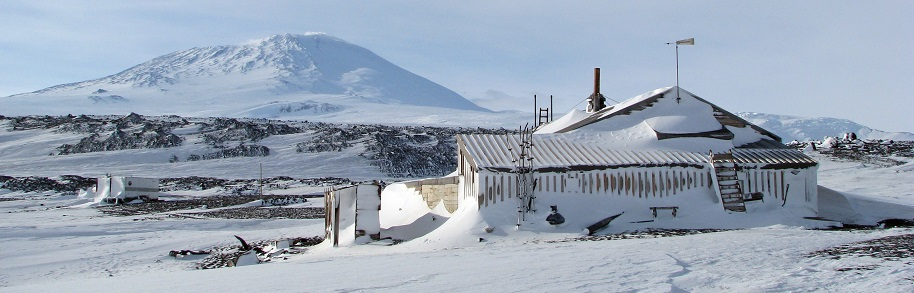
| Fig. 1: Scott’s Terra Nova hut at Cape Evans, looking towards Mount Erebus. Photo: A. White, Antarctica NZ (18 Oct 2015). | ||||||||||||
|
||||||||||||
|
||||||||||||
|
Please note that ATCM / CEP circulars are available only to specific contact points.
Please contact your Party Contact Administrator, to confirm if you have privileges to access this section.
To access this section you must log in using your personal Username/Email and password as registered in the AT Contacts Database.
To access this section you must log in using your personal Username/Email and password as registered in the AT Contacts Database.
If you are not registered, please request your party’s Contact Administrator to assign your credentials or contact the Secretariat for assistance.