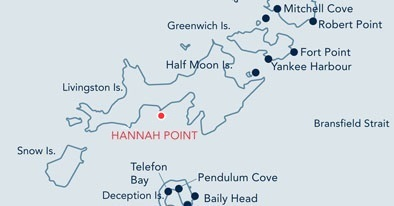
6. Hannah Point |
||||||||||

|
||||||||||
|---|---|---|---|---|---|---|---|---|---|---|
|
||||||||||
|
||||||||||
| Description | ||||||||||
| TOPOGRAPHY | ||||||||||
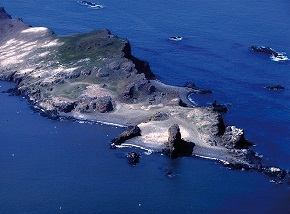
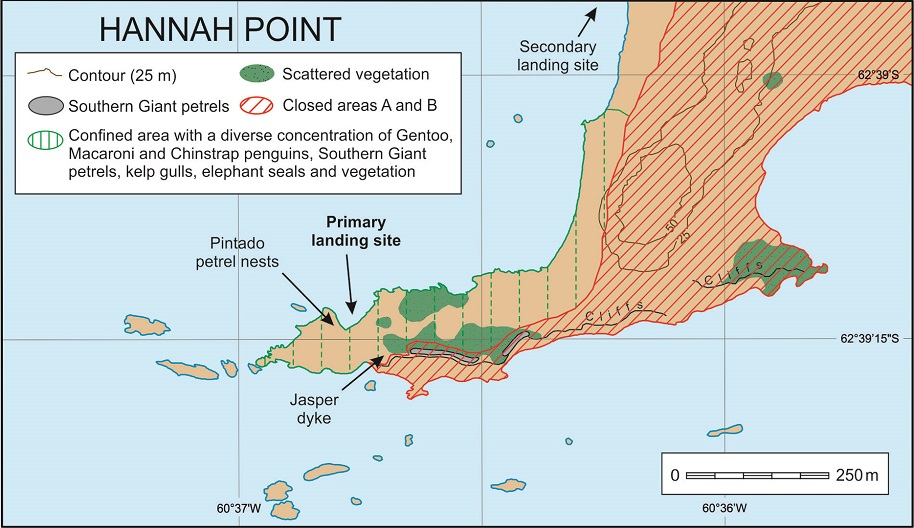
| Hannah Point (the Point) is a narrow peninsula undulating upward to knife-edged ridges and vertical cliff edges 30-50 metres above sea level. There is loose scree on higher slopes and ridges, evidence of rock falls, and a Jaspar mineral vein. Ash-covered slopes link the Point to the flat open beach area of Walker Bay. | ||||||||||
| FAUNA | ||||||||||
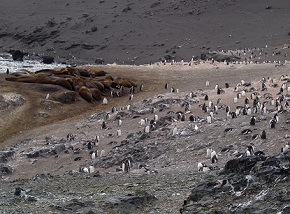
| Confirmed breeders: Antarctic tern, Black-bellied storm-petrel, Blue-eyed shag, Cape petrel, chinstrap Penguin, Gentoo penguin, Kelp gull, Macaroni Penguin, Skua, Snowy sheathbill, Southern giant petrel, Wilson’s storm petrel. | ||||||||||
| Regularly haul out: Antarctic fur seal, Southern elephant seal, Weddell seal. | ||||||||||
| FLORA | ||||||||||
| Vegetation covers the upper slopes of the Point. Deschampsia antarctica, Colobanthus quitensis, Xanthoria, spp.. and other crustose lichens are present. The green alga Prasiola crispa is widespread. Large moss patches cover Walker Bay. | ||||||||||
| OTHER | ||||||||||
| Some fossil and rock specimens may be observed towards the eastern end of the flat open beach area of Walker Bay. | ||||||||||
| Visitor Impact | ||||||||||
| KNOWN IMPACTS | ||||||||||
| Temporary paths form in the loose volcanic ash slopes closer to Walker Bay, and compacted paths are evident around the Point, formed by wildlife and possibly visitor use. In two reported instances since 1995 elephant seals have fallen from the cliff top wallow near the Jasper Dyke, due to disturbance. | ||||||||||
| POTENTIAL IMPACTS | ||||||||||
| Erosion and disturbance of vegetation and wildlife, especially as visitor space is limited on the Point. | ||||||||||
| Landing Requirements | ||||||||||
| SHIPS* | ||||||||||
|
Max pax on board: 200
Ships at a time: 1 Comments: * A ship is defined as a vessel which carries more than 12 passengers. |
||||||||||
| VISITORS | ||||||||||
| Comments: No more than 100 visitors at any time, exclusive of expedition guides and leaders, with not more than 50 on the Point. The Point: Given the limited space at this site, visits are strongly discouraged from the start of the breeding season (October) until after early penguin incubation phase (mid-January). After then, maximum 1 ship per day (midnight to midnight). Visits to last no longer than 6 hours. No visitors on the Point between 22:00hrs and 04:00hrs (local time). Walker Bay: a maximum of 2 ships per day (midnight to midnight). | ||||||||||
| Visitor Area | ||||||||||
| LANDING AREA | ||||||||||
|
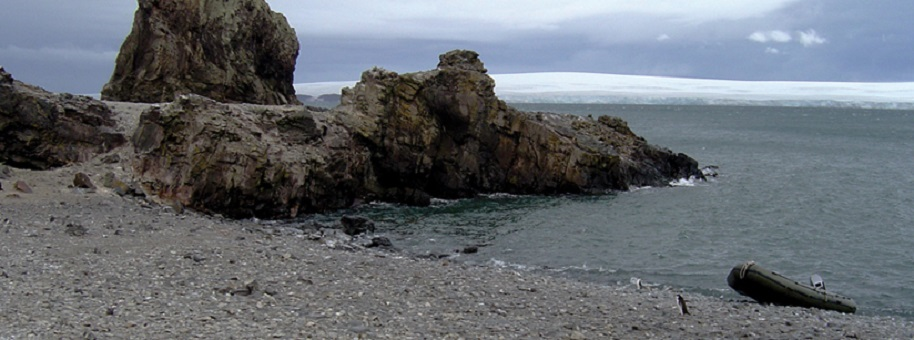
Primary: The small cobble beach on the northern coast of Hannah Point. Secondary: If conditions permit, an alternative landing area is the flat open area of Walker Bay, to the north of the Point. |
||||||||||
| CLOSED AREA | ||||||||||
|
Closed Area A: Cliff area with nesting southern giant petrels. Closed Area B: Rocky outcrops with nesting southern giant petrels, including a 50 metre buffer zone. |
||||||||||
| GUIDED WALKING AREA | ||||||||||
| Because of restricted visitor space, all walks around the Point should be strictly controlled in guided groups of no more than 15-20 visitors, which are well spaced and which follow the same path. Visitors walking on the Point should proceed in single file along a designated route, avoiding wildlife and other sensitive features. | ||||||||||
| FREE ROAMING AREA | ||||||||||
| Visitors may roam freely, but under supervision, on the beach in Walker Bay, avoiding Closed Area B. | ||||||||||
| Visitor code of conduct | ||||||||||
| BEHAVIOUR ASHORE | ||||||||||
|
||||||||||
| CAUTIONARY NOTES | ||||||||||
| The Gentoo colonies are thought to be expanding and the Point and the landing beach may be quite crowded as the breeding season progresses. The primary landing beach may be crowded with wildlife – under such circumstances it would not be possible to make a landing and maintain the required precautionary distances. Both landing beaches are prone to swells. Be careful near the jasper dyke. It is brittle and may crumble. Exercise particular caution not to disturb animals near cliff edges. If they are disturbed, they may retreat and fall. | ||||||||||
|
||||||||||
| Hannah Point landing beach | ||||||||||
|
||||||||||
|
||||||||||
|
|
Please note that ATCM / CEP circulars are available only to specific contact points.
Please contact your Party Contact Administrator, to confirm if you have privileges to access this section.
To access this section you must log in using your personal Username/Email and password as registered in the AT Contacts Database.
To access this section you must log in using your personal Username/Email and password as registered in the AT Contacts Database.
If you are not registered, please request your party’s Contact Administrator to assign your credentials or contact the Secretariat for assistance.