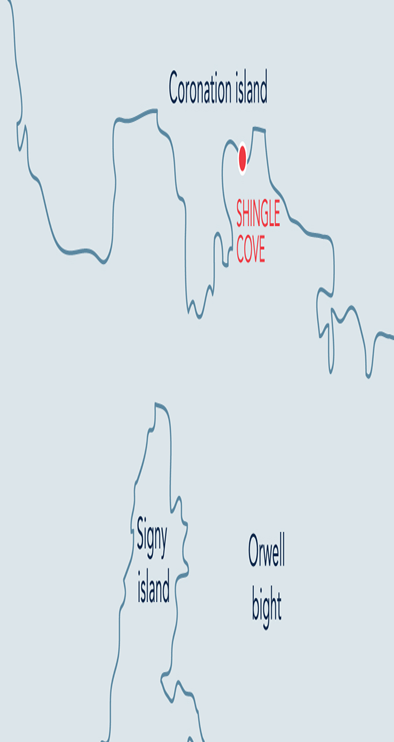
15. Shingle Cove |
|||||||

|
|||||||
|---|---|---|---|---|---|---|---|
|
|||||||
|
|||||||
| Description | |||||||
| TOPOGRAPHY | |||||||
| The south-western inner shore of Shingle Cove comprises low cliffs with two gravel beaches at either end of the inner bay, providing access to the higher ground. The site consists of boulder and cobbled scree with a few rocky outcrops of metamorphic schist, thin pale layers of quartz and feldspar accentuate the layering. Other metamorphic minerals such as deep red garnet and dark green amphibole may also be visible to the naked eye. | |||||||
| FAUNA | |||||||
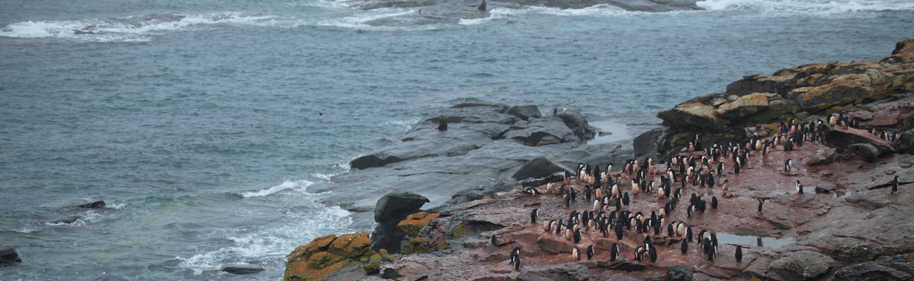
| Confirmed breeders: Adélie penguin, Cape petrel, Skua, Snow petrel, Snowy sheathbill. | |||||||
| Regularly haul out: Antarctic fur seal, Southern elephant seal. | |||||||
| Suspected Breeders: Antarctic prion, Kelp gull, Wilson’s storm-petrel. | |||||||
| FLORA | |||||||
| Forty-nine plant species have been recorded, primarily in the scree and in the extensive vegetation stands near the penguin colony. These include 17 moss species and 19 lichen species including Usnea Antarctica, Xanthoria spp. and Caloplaca spp. which can also be observed in the low cliffs below the colony. Both vascular plants, Deschampsia antarctica and Colobanthus quitensis are recorded here. | |||||||
| OTHER | |||||||
| Hazardous rocks and reefs lie immediately off shore. | |||||||
| Visitor Impact | |||||||
| KNOWN IMPACTS | |||||||
| None. | |||||||
| POTENTIAL IMPACTS | |||||||
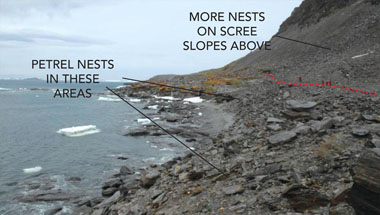
| Disturbance of wildlife, trampling of vegetation, damage to petrels burrows and trail formation. | |||||||
| Landing Requirements | |||||||
| SHIPS* | |||||||
|
Max pax on board: 200
Comments: Maximum 2 ships per day (midnight to midnight). * A ship is defined as a vessel which carries more than 12 passengers. |
|||||||
| VISITORS | |||||||
|
Maximum number of visitors at any time, exclusive of expedition guides and leaders: 100 Visitors per guide: 20 Curfew time period (from/to), in order to establish a rest period for wildlife: 22:00-04:00 |
|||||||
| Visitor Area | |||||||
| LANDING AREA | |||||||
|
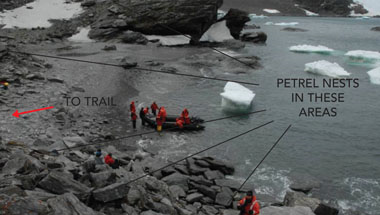
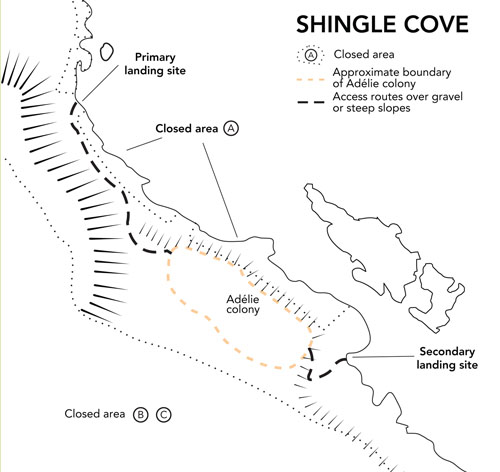
Primary: small beach area at northern end of visitor site in inner bay between two low cliffs with nesting petrels. Secondary: gravel beach to south of penguin colony protected by reef but generally more exposed to the swell. |
|||||||
| CLOSED AREA | |||||||
|
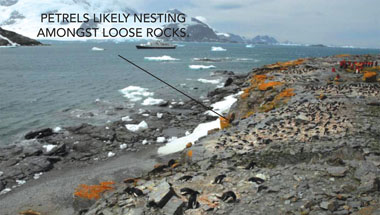
Closed Area A: low coastal cliffs of loose rocks above and below main track to colony where nesting petrels breed. Closed Area B: the large scree slopes inland from the colony where burrowing petrels breed. Closed Area C: extensive vegetation patch situated behind the Adélie colony. |
|||||||
| GUIDED WALKING AREA | |||||||
|
Walks to the Adélie colony must follow a carefully flagged route to avoid straying into burrowing petrel areas. Visits to the colony should be in small closely supervised groups with no more than two discrete groups of 20 in the colony area at one time. Visitors may approach the base of the coastal cliffs in order to observe petrel nests accessible from landing beaches. This must be in small groups (no more than 20) and extreme caution must be exercised not to disturb the breeding groups. Always approach from downhill and take care not to disturb rocks. Do not use flash photography. |
|||||||
| FREE ROAMING AREA | |||||||
| Visitors may roam freely in the immediate landing beach area. | |||||||
| Visitor code of conduct | |||||||
| BEHAVIOUR ASHORE | |||||||
|
|||||||
| CAUTIONARY NOTES | |||||||
| Strong winds and tidal variation can bring pack and brash ice quickly onto the beach area. Strong tidal variation can result in small growlers and bergy bits being stranded in the shallow area off shore. These can fracture suddenly during stranding or subsequent re-floating. | |||||||
|
|||||||
|
|||||||
| Adélie colony area | |||||||
|
|||||||
| Primary landing site | |||||||
|
|||||||
| Access route from primary landing | |||||||
|
|
|||||||
|
|||||||
|
|
Please note that ATCM / CEP circulars are available only to specific contact points.
Please contact your Party Contact Administrator, to confirm if you have privileges to access this section.
To access this section you must log in using your personal Username/Email and password as registered in the AT Contacts Database.
To access this section you must log in using your personal Username/Email and password as registered in the AT Contacts Database.
If you are not registered, please request your party’s Contact Administrator to assign your credentials or contact the Secretariat for assistance.