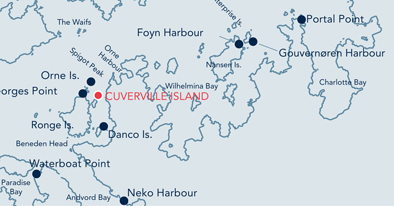
3. Cuverville Island |
||||||||||||

|
||||||||||||
|---|---|---|---|---|---|---|---|---|---|---|---|---|
|
||||||||||||
|
||||||||||||
| Description | ||||||||||||
| TOPOGRAPHY | ||||||||||||
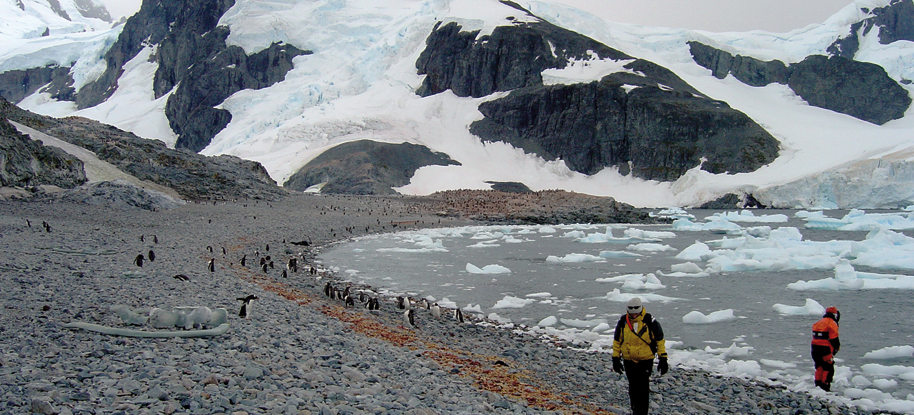
| This 2km by 2.5km island is a steep-sided dome, two-thirds of which is covered by a permanent ice-cap. The northern shore is a beach of cobbles and boulders, approx 1.5km long, backed by steep vegetation covered cliffs toward the east and gentler slopes to the west. | ||||||||||||
| FAUNA | ||||||||||||
| Confirmed breeders: Antarctic tern, Blue-eyed shag, Cape petrel, Gentoo penguin, Kelp gull, Skua, Snow petrel, Snowy sheathbill, Wilson’s storm petrel. | ||||||||||||
| Hunt Near Shore: Leopard seal. | ||||||||||||
| Regularly haul out: Antarctic fur seal, Weddell seal. | ||||||||||||
| FLORA | ||||||||||||
| Deschampsia antarctica, Colobanthus quitensis.; swards of moss species; and lichen species including Xanthoria. spp. Buellia spp., Caloplaca spp. Usnea spp. | ||||||||||||
| OTHER | ||||||||||||
| Early 20th century whaling artefacts including scattered whalebones and a whalers’ dam on the landing beach, and a waterboat and mooring chain on an offshore islet. | ||||||||||||
| Visitor Impact | ||||||||||||
| KNOWN IMPACTS | ||||||||||||
| Graffiti on the waterboat was reported in 2010. | ||||||||||||
| POTENTIAL IMPACTS | ||||||||||||
| Disturbance of wildlife, trampling of vegetation, and damage to whaling artefacts. | ||||||||||||
| Landing Requirements | ||||||||||||
| SHIPS* | ||||||||||||
|
Max pax on board: 500
Ships at a time: 1 Comments: No more than 3 ships carrying more than 200 passengers per day (midnight to midnight). * A ship is defined as a vessel which carries more than 12 passengers. |
||||||||||||
| VISITORS | ||||||||||||
|
Maximum number of visitors at any time, exclusive of expedition guides and leaders: 100 Visitors per guide: 20 Comments: No visitors ashore between 22:00hrs and 04:00hrs (local time), except for those engaged in organised overnight stays on Cuverville Island. This is in order to establish a resting period for the wildlife. |
||||||||||||
| Visitor Area | ||||||||||||
| LANDING AREA | ||||||||||||
|
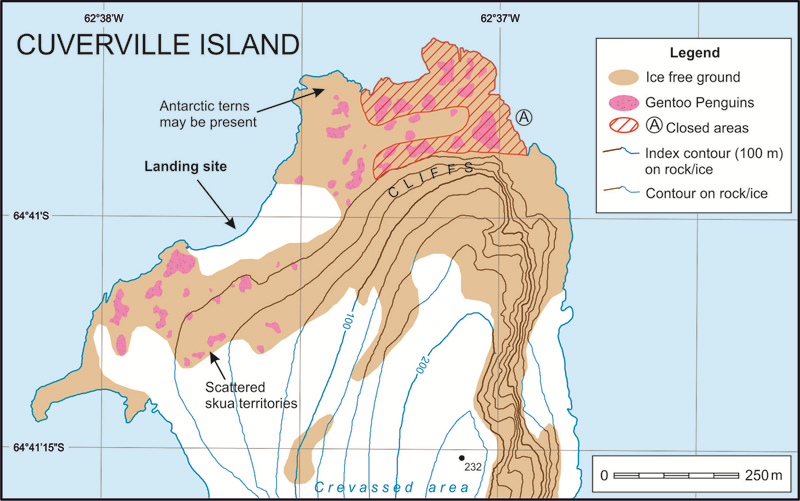
Preferred: The wide cobble beach on the northern end of the island. Avoid landing in the immediate vicinity of the gentoo colonies on the western end. Note: The small beaches on the eastern end of the site should not be used for landing, as they provide major access routes to the sea for penguins. |
||||||||||||
| CLOSED AREA | ||||||||||||
| Closed area A protects the routes used by penguins between the sea and colonies, and the closely spaced colonies on the high ground and outcrops below the cliffs | ||||||||||||
| GUIDED WALKING AREA | ||||||||||||
| When it is possible to stay 5m from wildlife, small groups of up to 15 people may visit the eastern end of the landing beach under close supervision, observing closed area A. The eastern end of the island contains the same wildlife (gentoo penguins) as the west, but has less room for visitors, and a higher likelihood of disrupting routes to and from the sea | ||||||||||||
| FREE ROAMING AREA | ||||||||||||
| Visitors may roam freely, but under supervision, except in the closed areas and the guided walking area. | ||||||||||||
| Visitor code of conduct | ||||||||||||
| BEHAVIOUR ASHORE | ||||||||||||
|
||||||||||||
|
||||||||||||
| Cuverville Island landing beach | ||||||||||||
|
||||||||||||
|
||||||||||||
|
|
Please note that ATCM / CEP circulars are available only to specific contact points.
Please contact your Party Contact Administrator, to confirm if you have privileges to access this section.
To access this section you must log in using your personal Username/Email and password as registered in the AT Contacts Database.
To access this section you must log in using your personal Username/Email and password as registered in the AT Contacts Database.
If you are not registered, please request your party’s Contact Administrator to assign your credentials or contact the Secretariat for assistance.