8. Paulet Island |
||||||||||||

|
||||||||||||
|---|---|---|---|---|---|---|---|---|---|---|---|---|
|
||||||||||||
|
||||||||||||
| Description | ||||||||||||
| TOPOGRAPHY | ||||||||||||
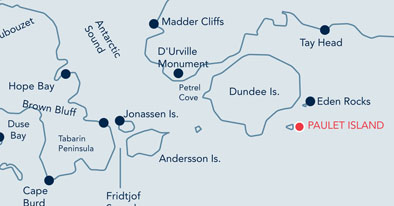
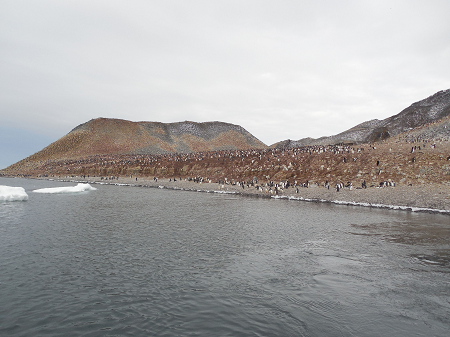
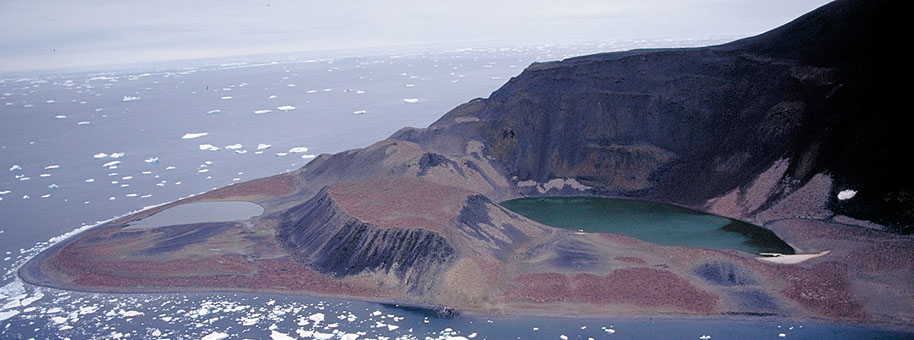
| This circular island is 1.6 km in diameter. It has a distinct volcanic cone that rises to a height of 350 metres. A flat terrace forms an apron around the north and northeast side of the island. At high tide, sections of the terrace are largely submerged, severely restricting visitor space. | ||||||||||||
| FAUNA | ||||||||||||
| Confirmed breeders: Adélie penguin, Blue-eyed shag, Kelp gull, Snowy sheathbill. | ||||||||||||
| Hauled out: Antarctic fur seal, Weddell seal. | ||||||||||||
| Offshore: Leopard seal. | ||||||||||||
| Suspected Breeders: Skua, Snow petrel, Wilson's storm petrel. | ||||||||||||
| FLORA | ||||||||||||
|
Moss and Lichen |
||||||||||||
| OTHER | ||||||||||||
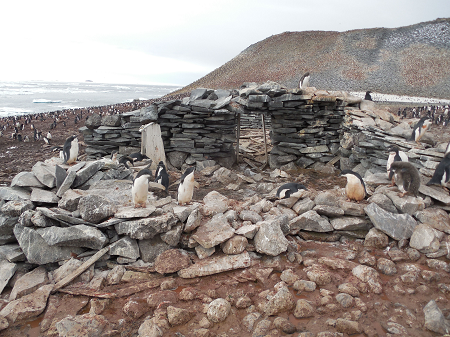
| Stone hut on Paulet Island built in February 1903 by survivors of the wrecked vessel Antarctic under Captain Carl A. Larsen, members of the Swedish South Polar Expedition led by Otto Nordenskjöld. A grave of a member of the expedition and the rock cairn built by the survivors of the wreck at the highest point of the island to draw the attention of rescue expeditions (Historic Site and Monument No. 41). | ||||||||||||
| Visitor Impact | ||||||||||||
| KNOWN IMPACTS | ||||||||||||
| None. | ||||||||||||
| POTENTIAL IMPACTS | ||||||||||||
| Disturbance of wildlife, particularly Adélie penguins, and damage to the historic site. | ||||||||||||
| Landing Requirements | ||||||||||||
| SHIPS* | ||||||||||||
|
Max pax on board: 200
Ships per day: 2 |
||||||||||||
| VISITORS | ||||||||||||
|
Maximum number of visitors at any time, exclusive of expedition guides and leaders: 100 Visitors per guide: 20 Curfew time period (from/to), in order to establish a rest period for wildlife: 22:00-04:00 Comments: No more than 100 visitors at any time. However, at high tide, no more than 50 visitors at any time in the area around the northern coast landing site (below the Historical Site and Monument No. 41). |
||||||||||||
| Visitor Area | ||||||||||||
| LANDING AREA | ||||||||||||
|
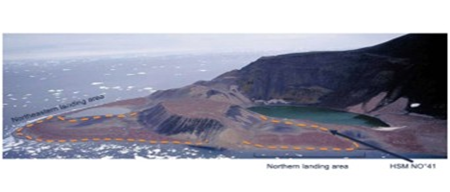
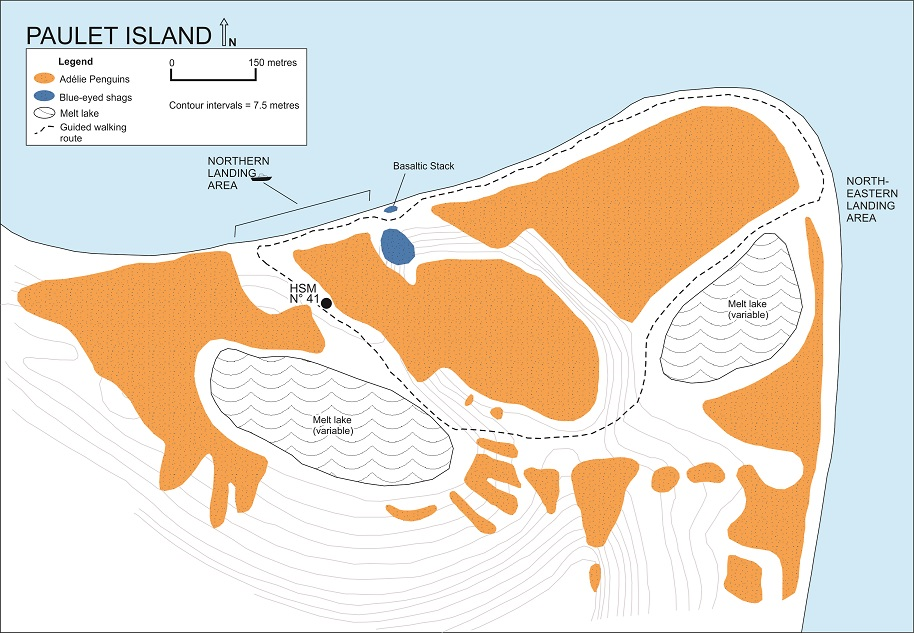
Ice conditions in the vicinity of the northern landing site can change rapidly. When operating amongst sea ice or icebergs, be vigilant to local sea and wind currents. Be alert to ice movement in relation to your operation and how it may affect both vessel and shore operations. Penguin colony distribution and high concentrations of Adelie penguin nests and entering/exiting the ocean along this beach will limit access to the Northern landing site and HSM. Based on penguin activity, this may be better as a small boat cruise or ship cruise for viewing the colony and HSM. Both landing areas can become very populated with penguins as the summer progresses, and all potential landings should be thoroughly evaluated prior to visitor arrival for maintaining adequate distances from wildlife. The best route to view the HSM will vary depending on colony distribution. To maintain appropriate distances from wildlife, mid- to late-season viewing may be limited to stopping at a higher viewpoint near a meltwater lake, or through non-landing activities such as small boat cruising to reduce wildlife disturbance. If landing is possible, it is recommended to consider a one-way walk – for example from the east site to the north site, or vice versa – to reduce overall disturbance to wildlife. |
||||||||||||
| CLOSED AREA | ||||||||||||
| The entire island is densely packed with wildlife, particularly Adelie penguins and snow petrels and Wilson’s storm petrels are strongly suspected of breeding in the scree slopes. Consequently, beyond the guided walking routes the rest of the area is considered closed because of wildlife. | ||||||||||||
| GUIDED WALKING AREA | ||||||||||||
|
Because of restricted visitor space, all walks at this site should be carefully controlled in guided groups of no more than 15-20 visitors. Groups should be well-spaced and follow the designated paths along the northern coast, or towards the historic hut and the volcanic ovoid lake. During peak breeding, it is likely to be impossible to follow longer walking routes due to concentrations of Adelie penguins. Exact routes will need to be carefully selected to avoid encroaching too close to wildlife. |
||||||||||||
| FREE ROAMING AREA | ||||||||||||
| None. | ||||||||||||
| Visitor code of conduct | ||||||||||||
| BEHAVIOUR ASHORE | ||||||||||||
|
||||||||||||
| CAUTIONARY NOTES | ||||||||||||
|
• Ensure the protection of the Historic Site and Monument. Maintain a distance of at least 1 metre from the walls of the hut, as trampling immediately next to the loose walls may cause damage. • Ice conditions on approach to the beach can change rapidly – extreme caution should be used in approaching and departing the island. |
||||||||||||
|
||||||||||||
| Paulet Island from above | ||||||||||||
|
||||||||||||
|
||||||||||||
|
|
Please note that ATCM / CEP circulars are available only to specific contact points.
Please contact your Party Contact Administrator, to confirm if you have privileges to access this section.
To access this section you must log in using your personal Username/Email and password as registered in the AT Contacts Database.
To access this section you must log in using your personal Username/Email and password as registered in the AT Contacts Database.
If you are not registered, please request your party’s Contact Administrator to assign your credentials or contact the Secretariat for assistance.