44. Hut Point |
||||||||||||

|
||||||||||||
|---|---|---|---|---|---|---|---|---|---|---|---|---|
|
||||||||||||
|
||||||||||||
| Description | ||||||||||||
| TOPOGRAPHY | ||||||||||||
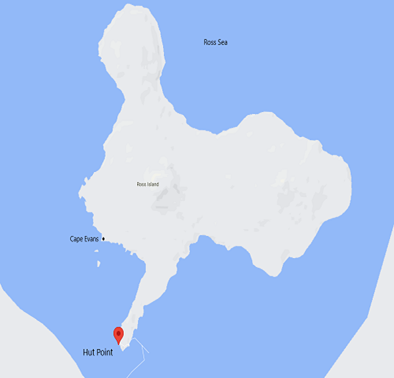
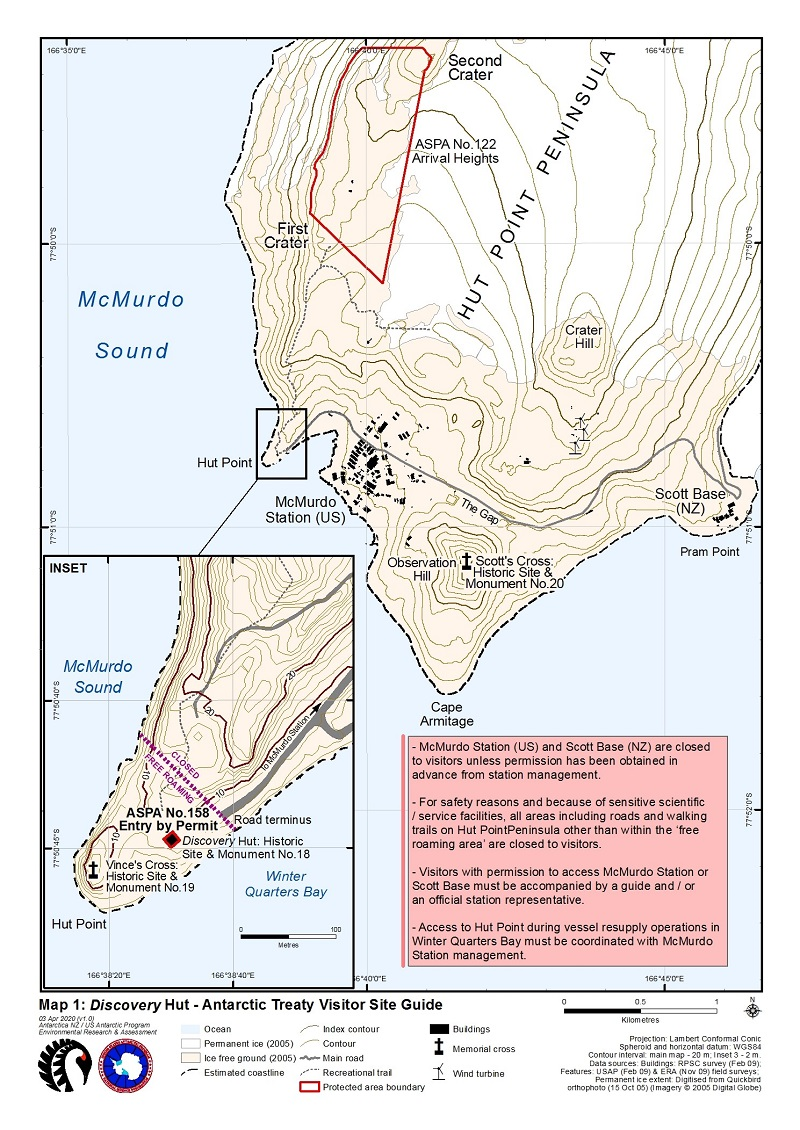
| Hut Point is a small ice free promontory protruding southwest from Hut Point Peninsula, Ross Island, and situated ~500 m to the west of McMurdo Station (US) (Map 1). | ||||||||||||
|
Adélie penguins (Pygoscelis adeliae), south polar skuas (Stercorarius maccormicki), emperor penguins (Aptenodytes forsteri), snow petrels (Pagodroma nivea), and Antarctic petrel (Thalassoica antarctica) are commonly observed in the area near Hut Point, although do not breed in the immediate area. Weddell seals (Leptonychotes weddellii) regularly haul out on adjacent sea ice in the summer, and leopard seals (Hydrurga leptonyx) may occasionally be seen. |
||||||||||||
| FLORA | ||||||||||||
|
Sparse lichens are present on rocky ground at Hut Point. |
||||||||||||
| OTHER | ||||||||||||
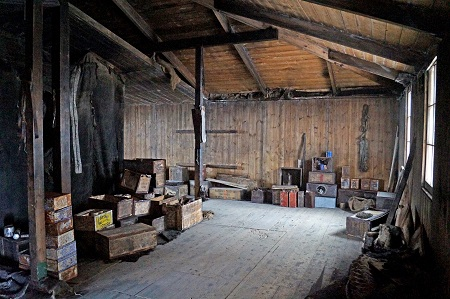
| Hut Point is one of the principal areas of early human activity in Antarctica. The hut built by Scott’s Discovery Expedition 1901-04 remains as an important symbol of the heroic era of Antarctic exploration and has been designated Historic Site and Monument (HSM) No. 18. Numerous artefacts remain within the hut. HSM No. 19, a cross erected in February 1904 by the British National Antarctic (Discovery) Expedition of 1901-04, in memory of George T. Vince (who died on the expedition) is situated ~75 metres west of the hut. HSM No. 20, a cross erected in January 1913 by the British Antarctic (Terra Nova) Expedition of 1910-13, in memory of Captain Robert F. Scott's party which perished on the return journey from the South Pole in March 1912, is located on Observation Hill ~1.4 km southeast of Hut Point (Map 1). | ||||||||||||
| Visitor Impact | ||||||||||||
| KNOWN IMPACTS | ||||||||||||
| Disturbance to historic artefacts, cumulative effects of human presence in and around the hut. | ||||||||||||
| POTENTIAL IMPACTS | ||||||||||||
| Damage to hut and associated artefacts, fire, importation of non-native species, litter, noise. | ||||||||||||
| Landing Requirements | ||||||||||||
| SHIPS* | ||||||||||||
|
Comments: No current limit on ships, although visitor numbers are subject to the limits set below. Comments: * A ship is defined as a vessel that carries more than 12 passengers. |
||||||||||||
| VISITORS | ||||||||||||
|
Comments: Entry into Discovery hut (ASPA No. 158) is prohibited except in accordance with a permit which must be carried on site. All visitors to Discovery hut must be accompanied by a trained guide. Consult the Management Plan for ASPA No. 158 and entry permit for further information. The historic hut is locked and a key must be obtained as part of the permitting process. • Annual max. number of visitors to Discovery hut (including guides): 2000 people. • Max. number of people inside the hut at any one time (including guides): 8 people. |
||||||||||||
| Visitor Area | ||||||||||||
| LANDING AREA | ||||||||||||
|
• There are no particular routes designated for access to Hut Point, although access by small boat (when there is open water) may be made to Winter Quarters Bay or to the coastline in McMurdo Sound ~100 m northwest of Discovery hut at approximately 77° 50' 42"S, 166° 38' 23"E. • Access from McMurdo Station to Discovery hut is usually along the road around Winter Quarters Bay. • Access to Hut Point during vessel resupply operations in Winter Quarters Bay must be coordinated with McMurdo Station management. • Helicopter landings within 100 m of Discovery hut are prohibited and helicopter overflights should be avoided to the maximum extent practicable. |
||||||||||||
| CLOSED AREA | ||||||||||||
|
• ASPAs are closed except to permit holders. Permit holders must adhere to the requirements and visitor numbers specified in the Management Plan for ASPA No. 158. • McMurdo Station (US) and Scott Base (NZ) are closed to visitors unless permission has been obtained in advance from station management. • For safety reasons and because of sensitive scientific / service facilities, all areas including roads and walking trails on Hut Point Peninsula other than within the ‘free roaming area’ are closed to visitors. |
||||||||||||
| GUIDED WALKING AREA | ||||||||||||
|
• Visitors entering Discovery hut (ASPA No. 158) must be accompanied by a guide. • Visitors with permission to access McMurdo Station or Scott Base must be accompanied by a guide and / or an official station representative. |
||||||||||||
| FREE ROAMING AREA | ||||||||||||
| The area of Hut Point in the immediate vicinity of Discovery hut, including from the concrete barriers at the McMurdo Station road terminus to Vince’s Cross (see Map 1, Inset). The free-roaming area does NOT include the trail leading up the ridgeline north of Discovery hut. The Visitor Code of Conduct (below) shall be followed at all times. | ||||||||||||
| Visitor code of conduct | ||||||||||||
| BEHAVIOUR ASHORE | ||||||||||||
|
||||||||||||
| CAUTIONARY NOTES | ||||||||||||
|
||||||||||||
|
||||||||||||
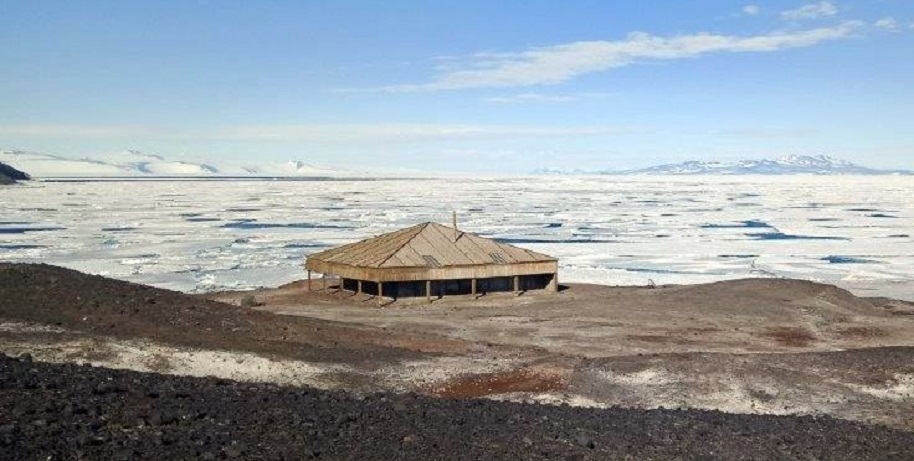
| Fig. 1: Scott’s Discovery hut (ASPA No. 158 & HSM No. 18) on Hut Point, looking south towards White Island and Black Island. Photo: S. Bamford, Antarctica NZ, Jan 2020. | ||||||||||||
|
||||||||||||
|
||||||||||||
|
|
Please note that ATCM / CEP circulars are available only to specific contact points.
Please contact your Party Contact Administrator, to confirm if you have privileges to access this section.
To access this section you must log in using your personal Username/Email and password as registered in the AT Contacts Database.
To access this section you must log in using your personal Username/Email and password as registered in the AT Contacts Database.
If you are not registered, please request your party’s Contact Administrator to assign your credentials or contact the Secretariat for assistance.